Tag Archives: Buying

The cost of debt and impact on property prices

As interest rates go down, property prices go up

The cost of debt… it sounds like a philosophical question or an attention-grabbing headline on the detrimental cost to society of Millennials living their lives on credit cards and buying too much avocado toast. What I simply mean is “what does it cost to borrow money”? You can borrow money for a variety of reasons however I am referring specifically in this article to borrowing to buy a property, aka getting a mortgage, and how cheap debt pushes property prices up.

If you speak to your bank, a mortgage broker or even type into google “mortgage rate” you’ll be inundated with offerings hovering around 1.8 to 2.2% (October 2021). These are annual percentage rates and simply put, if you had a mortgage rate of 2% you would be paying $20,000 per year on a $1million loan. But where does this magical 2% rate come from and is that high or low?
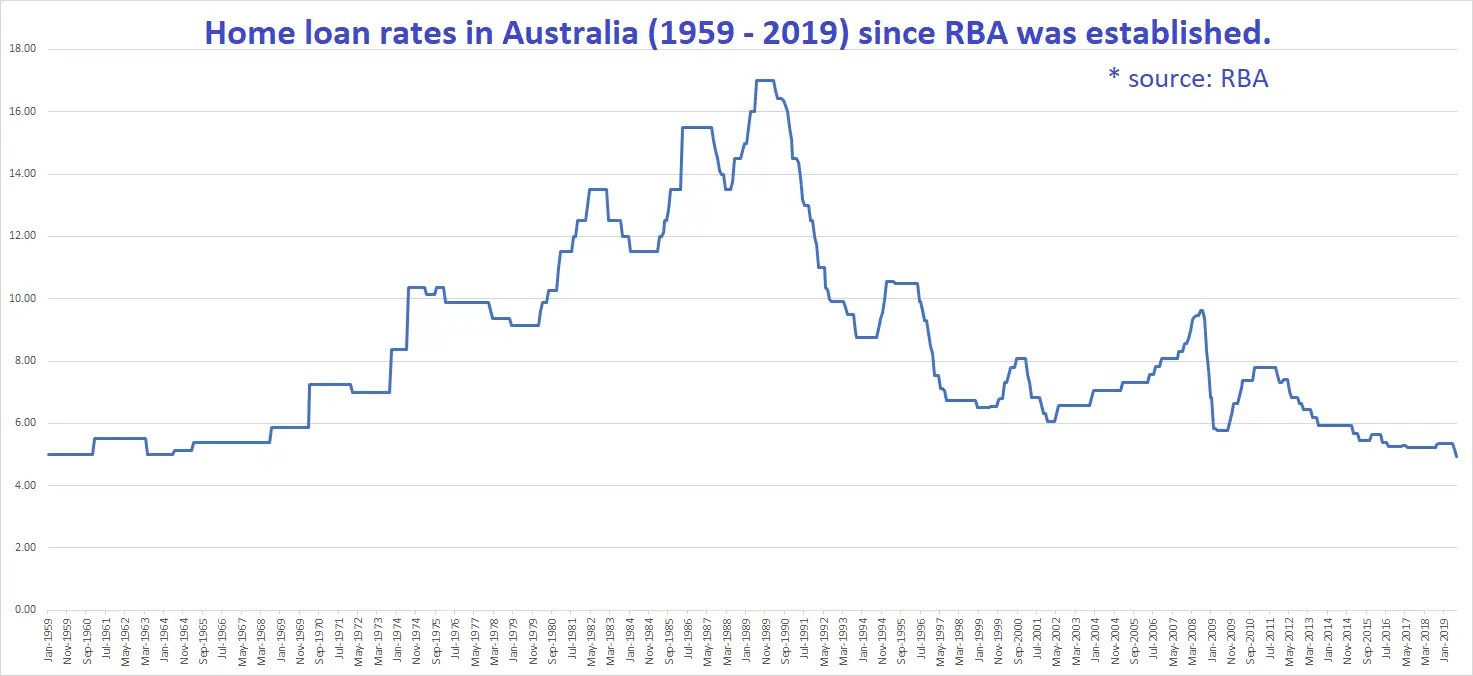
Mortgage rates were highest at 17% in January 1990

To answer the last question first, current mortgage rates are the lowest they’ve ever been. In January 1990 you could have been paying 17% for your mortgage and rates have never really been lower than 5 or 6% even during the Global Financial Crisis in 2008. So, why and how are mortgage rates so low right now? Which leads me back to the first question of how is the rate set?

All interest rates, whether earned on money deposited in a savings account or conversely paid on money borrowed to buy a house, are set off the Reserve Bank of Australia’s (RBA’s) cash rate plus a number of other factors (see previous post here). The RBA announces the new cash rate on the first Tuesday of every month (except January) and weighs a number of economic factors such as unemployment and inflation to determine the rate. The RBA can use the cash rate to influence borrowing or saving to help stabilise the economy.

Currently the RBA cash rate is 0.10%, the lowest it has ever been and almost zero.

If the RBA wants to encourage borrowing the cash rate will be lowered (you pay less interest) and if they want to encourage saving the cash rate will be increased (you earn more interest). Put another way, if the RBA wants people to borrow more they will make it cheaper and easier to do so. But why would the RBA want people to take on more debt?

During the global Covid pandemic with millions of people dying worldwide, billions being locked down for extended periods of time and countless businesses having to temporarily close and potentially going bust, the hit to the global economy has been huge. The Australian economy has been affected by Covid in many ways.

Total unemployment has soared from 5.1% to 7.4% in a five month period

The total unemployment rate has drastically increased from 5.1% just before Covid hit in Feb 2020 to 7.4% in July 2020.

Inflation has sky rocketed in 2021, a direct result of the global pandemic

Furthermore, inflation has gone from around 0% annual inflation in the year ending 2019 to almost 4% in 2020. An increase in inflation is generally a good thing but means the cost of living has increased and the rate at which it has increased during this time is significant. So, less people are employed and it costs more to live. Because of this and many other factors, the RBA is trying to stimulate the economy to spend. And the more we spend the more we borrow.

Therefore, currently you could say the cost of debt is cheap. It does not cost as much as it has done historically (or ever!) to borrow money, and because it is cheap, we can borrow more. For instance, in 2014 the average interest rate was 6%, which on a $1million loan would cost you $60,000 per year. Lending institutions calculate your loan size based on income, current spending habits and a number of other factors. If none of these factors have changed but the interest rate has dropped, because you used to be able to afford $60,000 p.a. on $1million but now it only costs $20,000, the bank is happy to lend you more because you can service a higher level of debt on a lower rate.

And this finally leads me to explain how being able to borrow more money means that buyers can pay more when buying property, which is driving property prices up. If you could only borrow $1million before and a house at auction goes past this point you would have been out. But now you can borrow $1.2million you still have more spending power to stay in the auction. It doesn’t really matter what the property is worth (up to a certain perceived value point), if there are two or more interested buyers with money to spend still interested in buying the property, the price will be set just higher than the lowest bidder’s limit.

The RBA and the government do not want to create a property bubble, nor push prices up any further but these unprecedented times cause for drastic action. Which takes me back to the Millennials at the start of this article and the economic conundrum of housing affordability for the younger generations. Should they stop eating avocado toast and save more, or should the government intervene with drastic changes to the property industry (via duties, taxes, incentives and disincentives)? Or will it be left up to the mums and dads to personally redistribute generational wealth?
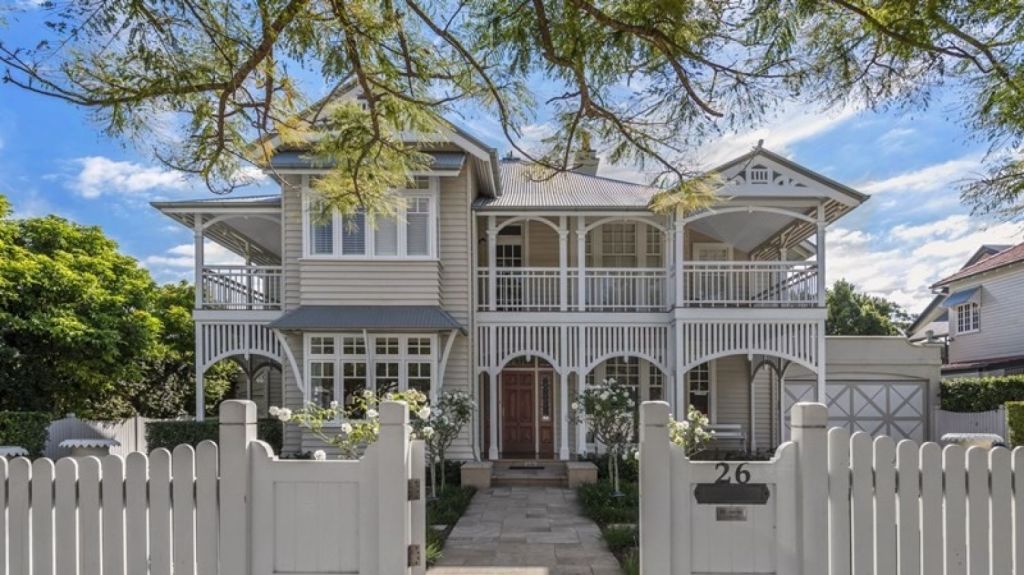
Queenslander homes

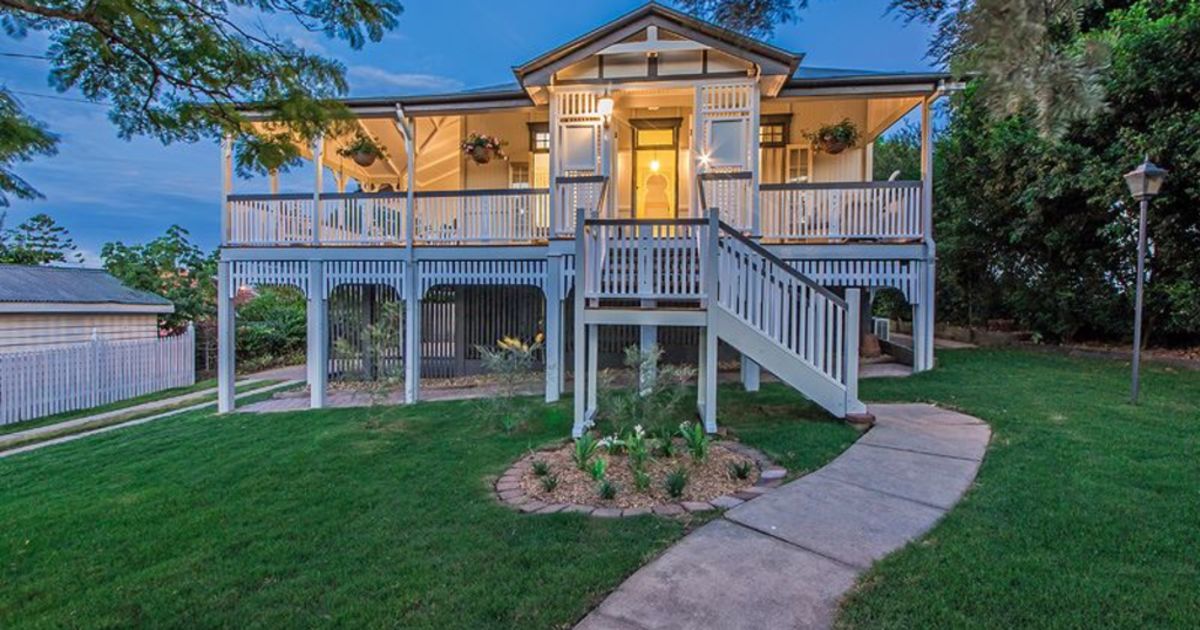
A Queenslander home from the 1880s

I have just moved back to Queensland, Australia (QLD) after 21 years. The last time I lived in QLD was for university and when I finished in 2000, I had secured an amazing graduate opportunity in Melbourne and couldn’t have left fast enough. I was an adult, I had a degree, a job and the world was my oyster!

Fast forward to today and I have lived in Melbourne, London and Sydney, met my wonderful husband and had three beautiful children. And whilst living in London for the second time, my husband and I decided it was time to finally go “home” and give our children the lifestyle we grew up with. Sunshine, a big backyard, a pool if we were lucky and most importantly, grandparents, cousins, aunts and uncles.

So here we are in Brisbane and I have fallen in love all over again with the Queenslander house. I’ve never lived in a Queenslander and never thought I would but walking past these magnificent beauties every day on my strolls around the neighbourhood has made me want to embrace fully our return home, including living in one of these glorious old houses.

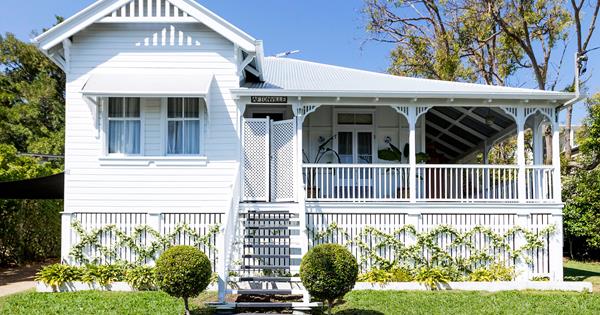
The Queenslander style home started being built in the late nineteenth century, making some of these homes over 100 years old, and is considered the most iconic Australian architectural style. The traits of a Queenslander are:

  • Single level home, detached on a separate block of land
  • High set on stilts
  • Made of timber with a corrugated roof
  • Large verandah extending around the house but not usually enclosing it
  • Decorative features such as cast iron or timber balustrades and coloured glass windows

While this style of architecture at first seems based on an aesthetic desire (because it’s so pretty!) in actual fact every feature was born from environmental and climate requirements, in addition to available building resources and the lifestyles of the time. This type of architecture is called “vernacular architecture”, where traditional or indigenous architecture has evolved over time based on local needs.

Stilts

To explore these features further and the reasons they were developed, lets start with the single level home set high on stilts. Queensland is HOT. It is so hot I didn’t think I could ever live here again, especially with my freckled skin and red hair. Before electricity and air conditioning, the houses were designed on stilts and stand alone to attract every small gust of wind under and around to cool the house down. The stilts also lessened the risk of the timber home above being attacked by termites.

Queenslanders are made from timber, which was cheap at the time and usually readily available from trees onsite. Long planks of timber were overlapped in a clapboard or weatherboard style giving excellent insulation for the humid climate. The timber and corrugated iron sheeting for the roof do not retain heat so are perfect for those hot summers over 40 degrees. Many in the northern hemisphere may be shuddering at the thought of cold winters in these cool houses but temperatures, certainly in Brisbane, usually bottom out at a mild 9 degrees in the evening.

Clapboard timber and the verandah

The large verandah allows that idyllic inside / outside lifestyle whereby windows and doors can be left open to capture the breeze whilst being protected from sun and rain. The verandah usually wrapped around most of the house and gave views over the garden, offering another living zone to the home.

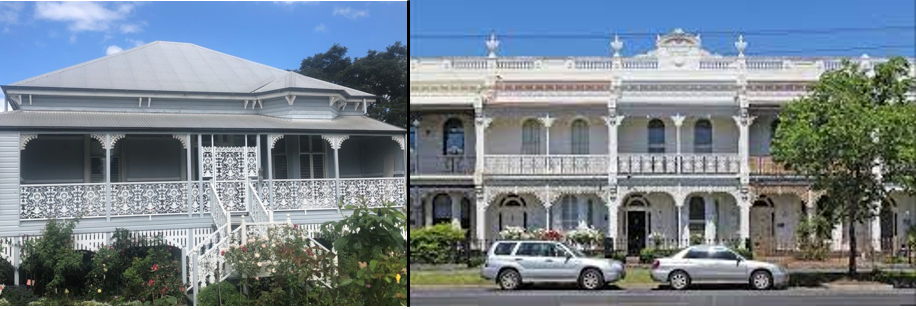
The verandah and façade of the house usually had charming details such as balustrades and fretwork. Interestingly whilst these Queenslander houses were initially designed out of necessity for the climate and access to local and cheap building materials I suspect over time as these houses were built by more affluent families the decorative features were inspired by Victorian terraces, preceding the Queenslander style by 30 years in Australia.

Queenslander v Victorian Terrace

However, the Queenslander has evolved in modern times. Many are “lifted” and a ground floor built underneath to maximise space. Partial enclosure of verandahs has occurred, starting with the aptly named “sleep-out”, which was probably a bit breezy, to now complete inclusion within the house structure. Blocks (plots or lots) have been subdivided to capitalise on increasing land values and neighbours can peer into each others homes as dwellings are built mere metres apart. And as some of these beautiful old homes are extended to maximise space, some renovations are more sympathetic than others.

The Queenslander is the most iconic Australian house style ever built. And whilst practical it is also beautiful. It captures perfectly the style of living in this hot climate where families live seamlessly inside and outside, eternally escaping the unforgiving sun and occasional tropical rains. I hope they continue to be preserved as the demands of increased housing prices and building costs influence our historical streetscape. And I dream of living in my very own one day, continuing the custodianship of these beautiful and functional architectural masterpieces.

Have we reached the peak of the property market?

housing-bubble2

Is it possible that property prices can continue to go up? How can anyone pay more than the lofty heights properties are currently selling for? Do we have a property bubble? And if so, will it ever burst??

Sydney has seen property prices soar in some suburbs by over 20% in the last 12 months. Melbourne is also achieving considerable price increases, with other Australian cities experiencing flat to down prices. The RBA cut the cash rate again last month to 2%, while acknowledging that Australia does not have a property bubble, just Sydney. So maybe I am in the eye of the storm.

I am seeing firsthand and hearing of these whirlwind auctions. Just recently I and a friend attended two separate auctions with the final selling price 10% higher than the passed in amount and absolute upper budget respectively. These auctions were across different price ranges ($1.6mio and $680k) and different types of properties (3bdrm house and 1bdrm apt) so this situation doesn’t seem isolated to a niche of the property market.

Coupled with the never ending articles on apartments selling for $1mio over their reserve, and an inner city terrace no wider than a Queen bed selling for just under $1mio, and the Sydney auction clearance rates at a high on 9 May 2015 of 89.2%, these two scenarios do not seem isolated.

The people benefiting from this situation are the sellers, clearly. Especially sellers who don’t have to buy or trade up in the same market: investors, downsizers, or families moving to QLD! If you can or need to sell a property in the current market, it seems like now is the right time. But without a crystal ball, how do we know prices won’t continue to increase. And can they?

Prominent and controversial ideas for curbing this bubble have been made to all corners of the industry: changes to property laws with regards to Capital Gains Tax (CGT), Self Managed Super Funds (SMSFs) and foreign investors; changes to lending practices for investment and interest only loans; and changes to selling practices with more policing of price guides and mandatory publishing of sale prices. But you could argue for and against all of these suggestions, and quantifying actually how much of an impact these would have is speculative.

Then there have been discussions on requiring fundamental shifts in how we perceive property: implementing a long term rental market with more support for tenants with longer leases, like in Switzerland; coupling this with changing the Australian dream of owning your home, and a house specifically; to moving perceptions towards other high returning assets as investments, such as shares. I think all of these ideas have merit, but would take significant time to implement.

What about the simple economics of supply and demand? Sydney, and particularly within a 10km radius of the CBD, is somewhere Australians and migrants will always want to live. That will never change. So is the solution to build more properties in this area? How can this be achieved with little to no new land available? And there is a lead time to building of at least 18 months (for an apartment block). So what then?

The quickest and simplest solution is to get more sellers to sell. The more properties on the more market the more supply, buyers then have more choice and there are fewer buyers competing for the same properties. So how do we get more sellers to sell? Keep spending big buyers… sellers won’t be able to resist selling at these astronomical prices!!


Will this property be a home or an investment, now and in the future?

interest-only_1

This is the fourth and final post in my introduction to personal property finance series. A very clever friend of mine commented on a previous post when discussing fixed v variable mortgages, that you can have a number of fixed mortgages. For instance, if you’d decided to fix $150k of your mortgage, you could get 3 x $50k fixed mortgages, which would allow you to repay more principal. Many financial providers restrict the amount of principal you can repay on a mortgage. So if the limit was $10k for mortgage, if you had three fixed mortgages, you could repay $30k of your total $150k fixed mortgage. Splitting your mortgages could also provide more flexibility if you wanted to fix some for one year, some for two years, and so on.

However… this is if you want to repay principal. Many people falsely assume you have to repay your mortgage and that repayments have to include principal and interest (P&I).

Now you’re probably thinking… but then I am not paying down my mortgage and I’m not “getting ahead”, or why would I want to pay the bank all of that interest?, or I thought those sort of mortgages were only for investors… Let me answer all of your concerns and show you that having an Interest Only loan is the best option for you.

First and foremost, your monthly repayments on a P&I mortgage will be higher than Interest Only. On a $100k mortgage where the interest rate if 4.69% and term is 25 years, your P&I repayment is $566.67 (P $175.84 & I $390.83). On the same mortgage, your interest only payment is $390.83. You save $175.84 a month!! When calculating how much you can repay (see previous post “What mortgage payments can I comfortably afford?”), an interest only loan may mean you could comfortably borrow more.

Secondly, if you have an offset account you don’t need to repay principal. See my previous post “What is my risk appetite regarding fixed versus variable mortgages?” for an explanation of offset accounts. If I have a $100k mortgage and $20k in savings in my offset account, this means I only pay interest on $80k. My monthly payments are even less $312.67, and my principal has been reduced by $20k. With a P&I mortgage, I am out of pocket $566.67 in the same month, and I have only repaid $175.84 of principal!! It would take almost 8 years to repay $20k via P&I repayments.

While you are not technically “repaying principal” or “paying off your mortgage” with an interest only mortgage with an offset account, you are reducing the principal amount of the loan, and therefore paying less in repayments.

So maybe you think… well that’s fine but I don’t have a spare $20k to stick in an offset account… even if you only have $1k in your offset and you deposit some small savings each month, you are a lot better off than trying to pay P&I. The more savings you deposit in your offset, the lower your mortgage payments are (incentive!) and you will pay less and less interest to the bank.

The big seller for me on an interest only mortgage with an offset account is the savings you deposit to reduce your principal is YOUR MONEY. You can do with it what you like, you can take it out when you want, and you can put more or less in each month. You can deposit $20k in your offset account and decide a few months later you want to renovate your bathroom. In the meantime you have reduced your monthly payments dramatically AND still have access to YOUR money. If you are repaying P&I, you cannot withdraw that $175.84 of principal. In time you can draw down equity on your home but that is a much more complicated process than transferring some funds from one account to another in your internet banking and hey presto! you’ve got $20k to spend on your renovations.

And finally, the question some people don’t ask themselves when buying a property is… “will I ever rent out this property” …what happens if work posts you interstate, a relative gets sick and you move to care for them, or even that you are lucky enough to buy another property to move into without having to sell the current one… your property could end up being an investment and rented out. If there is any chance this is a possibility, you should strongly consider an Interest Only mortgage as only the interest portion of your mortgage payments will be tax deductible. This leads us into a bigger discussion with regards to “gearing”, which I will cover in the next post.

So really, it’s a no brainer! Interest only mortgages are cheaper, may allow you to comfortably borrow more, with an offset account offer the ability to reduce principal significantly faster than repaying principal each month, and gives you access to that principal any time you want it, all while providing the flexibility for the future with regards to renting the property out as an investment. I promise you’ll be “getting ahead” a lot faster with an Interest Only mortgage.


Note 1: I found a few handy mortgage payment calculators: http://www.planabettermortgage.com.au/loan-calculators/p–i–interest-only.htm or http://www.infochoice.com.au/calculators/principal-and-interest-calculator/


Note 2: There has been vigorous discussion lately from various politicians that they want to get rid of Interest Only mortgages as they think they are contributing to Australia’s property “bubble”, however these mortgages are still widely available.

#7 What is my risk appetite regarding fixed versus variable mortgages?

I was chatting to a friend the other day, who is a very smart person, and she sheepishly admitted she didn’t know what her offset account was for. She knew she had one, she just didn’t know why. It is great she has an offset account, as used effectively these can save thousands of dollars per year. This is where we start discussing how to structure our mortgage to make the most out of our financial situation.

How are interest rates set?

Before we start talking about types of mortgages, let’s talk about interest rates. The interest rate is the cost to you of borrowing money and is quoted on an annual basis. If your interest rate is 4.69% p.a. on a mortgage of $281,000 you pay $13,178.90 per year interest (= 281,000 x (4.69/100)). To work out what this is on a monthly basis, simply divide by 12. For this topic let’s exclude repayment of principal in our mortgage payments, this will be discussed in the next post.

Why is the mortgage interest rate 4.69%? A mortgage interest rate is basically comprised of 2 components:

  1. The cost to your financial provider of borrowing the money in order to lend to you, which is driven by the Reserve Bank of Australia’s overnight cash rate, currently 2.50% (August 2014). The RBA sets this rate on the first Tuesday of every month (except January) based on a number of economic factors to both stimulate and regulate the Australian economy.

This is not exactly what your financial provider pays because it depends on how they borrow the money but if the RBA cash rate is higher, typically it costs more for your financial provider to borrow the money, and vice versa.

The RBA cash rate influences the mortgage interest rate depending on what type of mortgage it is:

  • Variable mortgage rates can change on a monthly (and sometimes more frequently) basis, depending on the move in the RBA’s cash rate. Variable mortgage rates typically move in tandem with the RBA’s cash rate.
  • Fixed mortgage rates are fixed for a time period, for instance one, three or five years. Your financial provider will forecast over this time period how they think the RBA’s cash rate will move and factor this in. For example, if the cash rate is currently 2.50% and the financial provider expects it to gradually increase to 4.00% over the next three years then they will use an average rate for a three year fixed interest rate.
  1. The margin your financial provider charges over and above the cost to them of borrowing the money in order to lend to you. Financial providers are businesses with owners and shareholders so they need to make a profit.

Interest is calculated on the mortgage amount on a daily basis, and varies depending on whether you are also paying down your principal or have an offset account.

Fixed vs Variable mortgages

Basically there are two types of mortgages: fixed and variable. A fixed mortgage locks in an interest rate for a period of time. A variable mortgage interest rate moves in line with the RBA’s cash rate.

The pros and cons of a fixed mortgage:

Pro: You know exactly what your mortgage payments are, which makes it easy to budget for and there are no surprises

Pro: If interest rates increase you are protected from this

Con: A fixed mortgage is locked in for the time period you agree up front. So if the interest rates move significantly against you (i.e. mortgage payments decrease), you decide you want to remortgage with someone else, or you sell your property, you are locked in until your mortgage matures. You can break your mortgage before maturity but the fees tend to be huge, effectively the interest your financial provider would have earned from you for the remainder of the mortgage.

The pros and cons of a variable mortgage:

Pro: You can take advantage of downward moves in the interest rate, i.e. mortgage payments decrease

Pro: You are not locked in to a fixed period of time, and can change from a variable to a fixed loan or a different financial provider with no penalties at any time

Pro: typically variable mortgages can have an optional offset account. An offset account is the home owner’s friend – everyone should have one. See below for more details.

Con: Your mortgage payments can change month by month and could increase significantly

Another consideration is if you expect rates to increase, fixing your rate now can have its benefits. It is hard to forecast the movement of rates with any certainty, so I would suggest speaking to a financial adviser. Bear in mind if your financial provider also expects rates to increase, they may have factored this into the fixed rate anyway. If you expect rates to decrease, a variable rate could be beneficial.

Determining the term of your fixed rate mortgage is important. Do you want your payments locked in for one, two, three… years? Some things to consider:

  • As above, how you expect rates to move. If you think rates will move quickly downwards you may want to fix for a shorter period of time so that you can take advantage of a lower rate sooner,
  • When will you be selling the property? If you plan on selling the property in two years, then fix the mortgage for two years. You will pay significant fees to break a fixed mortgage before it matures, however you may be able to get around this if you buy another property and transfer the mortgage with your financial provider to the new property.
  • Are your circumstances going to change: Will you renovate in a year? Will you be moving overseas soon? Are you planning on having children and one parent going on leave? What suits now may not suit in a few years so you may want your mortgage to mature when your circumstances will likely change so that you can re-assess your position and structure your mortgage differently. Maybe hard to forecast but worthwhile considering.

The Offset Account: everyone should have one

Offset accounts are typically available only on variable mortgages.

Cash deposited in your offset account reduces your mortgage payments. If you have a variable mortgage of $100,000 with an offset account and in that offset account you have savings of $20,000 plus your monthly salary of $3,750 is deposited, this “offsets” or reduces the mortgage amount on which you pay interest:

Mortgage amount        $100,000
Less: Savings                  $  20,000
Less: Monthly salary    $    3,750 (deposited on 1st of each month and drawn upon to pay bills and expenses for the month)
Net mortgage amount  $ 76,250

Monthly mortgage payment on $100,000 at 4.69% = $390.83

Monthly mortgage payment on $76,250 at 4.69% = from $298.01 (depending on when bills/expenses are paid and money is withdrawn)

Saving of $92.82 per month or $1,113.84 per year.

Any cash you deposit in your offset during the month will save you money. The more you deposit the better!

The offset account amount is equal to the variable mortgage amount. In determining how big your variable mortgage should be I think considering how much you can put in your offset account is important. If you have savings of $20,000 and you plan to save more, you might want to make your variable loan (and therefore the offset account size) at least $20,000.

Make sure you get a drawdown facility on your offset account so any funds deposited can be withdrawn if required.

You can have it all: fixed AND variable

There is no right or wrong answer whether you choose a fixed or variable mortgage; there are benefits and negatives to both. What is important to know is that you are not confined to only one type – you can split your mortgage between both fixed and variable. So when you buy your $380,000 property and take on a $281,000 mortgage you could make half fixed and half variable, or any split of your choice.

In addition you can change some or all of your variable mortgage to fixed at any time and when your fixed mortgage matures you can change some or all to variable.

Each financial provider will have different fixed and variable mortgage products with different features so speak to your financial provider or mortgage broker for more details. Speak to your financial adviser to determine the best split between fixed and variable for your circumstances.

#5 What mortgage payments can I comfortably afford?

152790-aus-bus-pix-mortgage-costs-exit-fees-homeloans

So with $100,000 we can afford to buy a $400,000 property. But can we make the mortgage payments? Looking at a home loan comparison rate finder on the internet I can see the lowest three year fixed rate home loan rate is currently 4.69% (June 2014), which would make our monthly payments $1,250.  But can we afford this?

Regardless of how much the financial provider will lend you, you need to do your own calculations to work out realistically and comfortably how much you can borrow. I remember when I was asking for mortgage pre-approval five years ago the bank was willing to lend me close to $1million!! Believe me, I could NOT have afforded this AND been able to buy bread and milk each week!

FIRSTLY you need to work out your income and expenses. The simplest way to do this is get all of your bank and credit card statements for the last 3-6 months and identify all of your (and partner’s if relevant) net income (post tax and super) and expenses. Being the geek I am I like to put this in a spreadsheet & categorise it. Remove any non-recurring items but make sure you include big annual expenses such as holidays and insurance policies and income such as bonuses. If the property will be your new home, deduct any rent or mortgage payments as these will not continue. Let’s assume we’re doing this analysis for a monthly basis.

Income:
$ 3,750           Salary (net after tax & super)
$      50           Share dividends
$    300           Interest
$ 4,100          Total Income

Expenses:
$    300           Utilities
$    350           Food (at home)
$    500           Entertainment: eating out, alcohol, movies, etc
$    150           Mobile phone, travel to work, magazines
$    400           Car payments, petrol, servicing, insurance, etc
$    300           Clothes
$    300           Holidays
$    400           Insurance: home & contents, health, etc
$    200           Personal care
$    100          Gifts
$ 3,000          Total Expenses

Net income per average month $1,100

This exercise is very simple if a bit tedious, but unbelievably eye-opening too. If you categorise your expenses and calculate the percentage of each category against the total, sometimes you might be frightened how much you spend on gifts, going out, travel etc. It’s also a good exercise to do if you want to save money.

SECONDLY you need to forecast your short to medium term financial position. Consider the timeframe that you would consider fixing the mortgage for (typically 3-5 years). This is incredibly important because if your circumstances change, you need to still be able to comfortably pay the mortgage. Some things to consider…

  • Income increasing – For example, if you have your own business and it is in the growth phase, or you expect a pay increase from work. This is a tricky one and being the conservative I am, tend to approach this type of forecasting with caution,
  • Income decreasing – For example, what are the chances of being made redundant? Is there a seasonal downturn in your earnings? Will one of you be going on maternity/paternity leave soon?,
  • Expenses increasing – For example, will I start having children, or for those parents out there, another child? Are you buying a new car? Going to start studying again?,
  • Expenses decreasing – For example, will repayment of HECS debt or any other loans or credit cards be ending soon?

Adjust your average monthly income and expenses for these future events and you end up with the net amount available to pay a mortgage. If you also want to save money in addition to paying your mortgage then adjust this further.

LASTLY, using a simple calculation we can work out the mortgage payments you can comfortably make each month:     (monthly net income X 12 mths)  /   annual mortgage rate %

In this example:                                                                                        (1,100 X 12)    /    4.69%     = $281,000 mortgage

Therefore this tells us that even though we have saved $100,000 (well done!!) and we can afford to buy a $400,000 property (with a $320,000 mortgage), we actually can only afford a $281,000 mortgage. So using our LVR of 80% this means we can only really afford a $350,000 property. Again, by thinking “well I’m ready to go with my $100,000, that’s my 20% deposit for a $500,000 property”, you not only need to look at the total CASH OUTLAY when buying a property but also your NET INCOME to see what mortgage you can really afford.

Up next… 3. What is my risk appetite regarding fixed versus variable mortgages?

#4 How much cash and/or liquid assets do I currently have?

831619-cash

When we’re thinking of buying a property sometimes we can focus on just the amount required for the deposit. But there is a lot more to paying for a property than that.

What is “cash”?

  • The money you have in your wallet, which isn’t going to get you far when buying a property so you can exclude this (!),
  • The net CREDIT balance in all of your bank accounts. For instance you may have a transaction account, which your salary gets paid into, you pay bills from, have an ATM card and draw cash out of. You may also have a savings account, and
  • The balance in a term deposit that is not locked in for a fixed period of time, i.e. a high interest earning account such as an ING account or similar.

What are “liquid assets”. In this case liquidity has nothing to do with a state of matter such as water, but instead refers to how easily an asset is converted to cash.

  • The simplest example is shares, which are traded on a stock exchange and can be sold for cash as quickly as you can call your broker, and
  • A term deposit locked in for a fixed period of time that is either maturing soon or the contract can be broken early for a penalty fee.

So go ahead and add up all of the cash and liquid assets you have and then let me tell you how that hard earned money will be spent when you buy a property…

1. Firstly you need a deposit. Nowadays financial providers will tend to lend you up to an 80% LVR, but sometimes 90% if you take out Mortgage Insurance (MI) and/or have a guarantor. But beware, MI is very expensive.

I would like to quickly explain how MI works. Going back to our $500,000 property, if you only have a $50,000 deposit your mortgage provider can charge you insurance in the event you default on your repayments. On a mortgage of $450,000 you could pay around $8,820 of insurance (about 2% of the loan).

You can either pay the MI upfront (which means you need $58,820) or add it into your mortgage, which may seem like a good idea as the additional monthly payments aren’t that much (for e.g. $67/month) but you end up paying interest on the MI and over the life of a 30 year mortgage you could pay almost three times the amount of insurance!

2. Next we have lots of purchasing costs that can really add up: lawyers or conveyancers fees, property search fees, building and pest inspections, mortgage and associated fees etc. I would budget for another $5-10k on top of your deposit, and more so if you do this for a number of properties you try to buy along the way.

3. Then comes the big hitter, Stamp Duty. Stamp Duty is charged on the value of the property by the state government for transferring the property from one owner to another. Stamp Duty varies from state to state, generally increases in proportion with the value of the property and concessions may be given for first homeowners. Using our example of the $500,000 property and lets say we’re in NSW, the stamp duty would be almost $18,000, or 3.6%.

4. And then finally, after the deposit, stamp duty and purchasing costs, do you have any more money left over? What you can do with this will be discussed in later posts.

In summary, to buy a $500,000 property, we need to have $128,000:                                                                               $100,000       20% deposit                                                                     $  10,000        purchasing costs                                                           $  18,000        stamp duty                                                           $128,000


If I had $100,000 and thought to myself, “well I’m ready to go, that’s my 20% deposit for a $500,000 property”, in actual fact I can only afford to buy a $400,000 property:                                   $  80,000        20% deposit                                                                     $   7,000        purchasing costs (assuming we economise)           $ 13,500        stamp duty                                                          $100,500


This analysis tells us what value property we can buy, but it does not tell us what value property we can afford to pay mortgage repayments on.

Coming soon… 2. What mortgage payments can I comfortably afford?

#2 All roads lead to Home…

IMG_0207

At the age of 21 with a small deposit saved up from casual jobs during school holidays and while at university, I eagerly searched for my first property.  I was living in Melbourne at the time, having moved there for my first job out of university, and spent the better part of a year getting to know the inner city suburbs while on my search. I ended up finding an old, unrenovated but decent two bedroom, one bathroom, no carspace apartment in a 70’s brick building in North Melbourne. I negotiated the price to $210,000 and with my 10% deposit approached my bank. In hindsight I should have tackled that process the other way round. My bank refused to provide me a mortgage with the advice to “find something cheaper”. Not very helpful.

Needless to say I was a little put off. Being a fatalist, in hindsight it wasn’t the right time for me to buy. I then went on to rent for the next seven years, moving country and cities twice. I ended up in Sydney with a nice deposit saved from a few years living in London converted to AUD with a very favourable exchange rate. I then repeated the same process that I had done in Melbourne, getting to know the inner city suburbs of Sydney, looking at houses and apartments, renovated and in badly need of, in a broad price range and across many suburbs, up to 12 properties every Saturday for seven months until finally I found a house I wanted to buy, could afford and wasn’t swiped out from under me at a heated auction. The house was pretty dated but in a “growth” suburb and after much negotiation on price with a real estate agent who was quite frankly sexist (its not the 60’s anymore mate) I finally became a proud homeowner, settling the day after my 29th birthday.

I then spent the next 18 months slowly renovating my new home. I had bought a 100 year old Victorian terrace that had been stripped of all its beautiful period features, was stuck in the 70’s and was, shall we say, very “Mediterranean”. I had the front facade rendered (over the stucco, nice) & repainted, the porch retiled, the backyard landscaped (previously entirely concreted), a new kitchen relocated and installed, the upstairs bathroom redone, and repainting inside (mostly to remove the 40 years of smoke stains and smell).  In addition, I and my then boyfriend, now husband (now that’s love!), painstakingly stripped the staircase of carpet, carpet nails, vinyl treads and some sort of tar-like glue, metal kick plates and three layers of paint. What a nightmare! Where I could save money I (and my family and boyfriend) did as much of the work as we could.

My boyfriend then bought a fabulous warehouse apartment in a very trendy part of Sydney and I moved in with him, leaving my house partially renovated and leased to tenants. Being a landlord can be an interesting experience, but that is a discussion for another post!

After getting married and having our first baby we find we need more space so are moving back to our house, but not before we finally complete the renovations. We’re in the process of tendering for a builder now so I expect many a funny, trying, learning and/or just plain crazy anecdote to come out of that process!