All posts by georgiabarkell

101 decisions… it’s hard to get them all right

There are always going to be things that bug me now that the renovation has finished. Things we didn’t quite get right, that we missed, or that we just couldn’t visualise with everything else going on. Fundamentally the number of components, decisions and changes in a renovation make it near impossible to get it 100%. We got all the big things right; walls removed, doors installed, bathroom fittings, etc, but some of these small things I can’t help but wince every time I look at them. Easy mistakes to make, and that’s why I want to share them with you, so you don’t forget the little things…

Door Furniture

IMG_7428IMG_7427

“What the hell is door furniture?” I hear you ask. Well I asked the same thing! It is door handles, locks, hinges etc, and the builders like owners to choose and buy these items so that they source exactly what they want. Fair enough, but wow was there a lot to learn about door furniture. The range of hinges is one thing, different metals… I could go on! What I think we messed up this time was that some of our doors have “silver” door furniture and some have “brass”. The latter was in keeping with the Victorian period features, most of which are upstairs, and the silver is a little more modern downstairs. However our living room has both silver and brass on two different doors and I wish we’d realised this would clash. I know I know, probably no-one will notice… but I will!

Painting details

IMG_7429

When you decide to re-paint, you really need to create a painting schedule which lists every part of the room that is going to be painted, and in which paint. For instance; skirting boards in Dulux Vivid White Semi Gloss, downstairs hallway in Dulux Puhoi Half Low Sheen, upstairs hallway in Dulux Whitsunday Island Low Sheen, and so on. The more detailed and extensive the list, the closer your painters should get to fulfilling your requirements. However, sometimes it’s hard to know whether to paint a wall one colour, or another. I really think we should have painted the inside of the front door in the same blue colour of the walls. Easy fix, I know, just means I have to get the paint out myself now!

IMG_7435

In addition, I didn’t really consider how our interior blue feature colour would look next to our exterior colour, which is a grey-blue. There is one wall in the back of the house, only which is separated by the glass bi-folds next an exterior wall. The colours don’t look wrong together but it’s a lot of blue and maybe I would have painted the internal wall white instead…??

Light fittings

IMG_7430

I think we did pretty well, choosing some really interesting and effective light fittings for each room. The front room light fitting is a bit bland, but that was sort of what I was going for so I can only really blame myself. However, while I love the light fitting in the upstairs hallway above the stairs, it is too small for the space. I should have measured the space and the light fitting and realised it needed to be bigger, it just doesn’t fill it well enough. Google “light fitting size of room” for some really handy guides.

IMG_7432

In addition, the down lights in the kitchen and sunroom are not in one line. I kept harping on this with the builder but the message obviously did not get through to the electrician… this one really bothers me as it’s not an easy or cheap fix and one we definitely won’t be investing in changing.

Architraves, cornices, door frames etc

IMG_7433

We didn’t do too badly here actually. We selected new skirting/architraves for the entire downstairs and I didn’t think to match them with what was upstairs but you wouldn’t notice the difference thankfully. Something to look out for next time though. The builder however, in his infinite wisdom, managed to forget to put a door frame around the downstairs bathroom door. He installed beautiful door frames that match the skirting around the new bi-fold doors we put into the front room but somehow didn’t think the new bathroom door needed a door frame. I don’t know why. And the render finish on the wall around the door is not great so I can’t help but cringe every time I walk through the door…

New outlooks

IMG_7434

We installed a deck in the backyard and it’s fabulous but what I didn’t consider is that the view from the deck would be much higher and further out into the backyard than the original old concrete steps. And I didn’t realise that the outlook from this deck looks straight into the neighbour’s backyard and into the back lane. And conversely, the neighbours and passers-by can sort of see into our deck too. I should have raised the brick work higher on the fence bordering our neighbours. However we needed to include this in the DA so technically I can’t fix it now…

Sticking to the budget
FullSizeRender

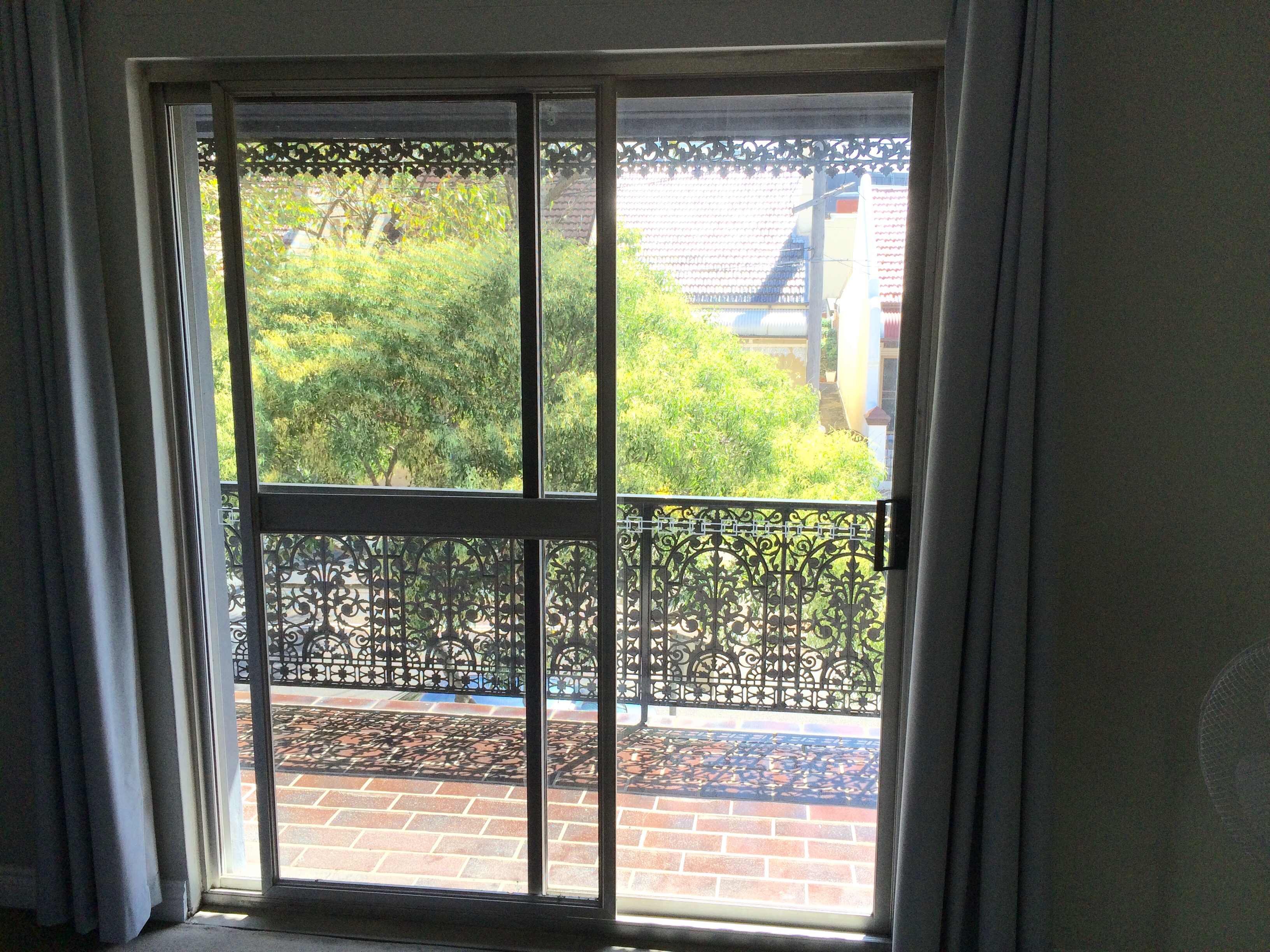
We didn’t have an endless budget so opted not to change the ugly aluminium balcony door in our bedroom to a more traditional wooden style, however with all of the tradies onsite at the time, it would have been easy and much cheaper. Now when we do it later we will need to get a carpenter, renderer and painter to complete the small job and will pay a premium. Ah well!

Not a huge list, most of which we can fix, but little things I wish I had thought of along the way. As exhausted as we were from making decisions on every possible thing, we really mustn’t forget the little details.


Cash rate cut by 0.25% to 2.25%

Cash rate graph

Yesterday we saw the first meeting of the year for the RBA and a cash rate cut of 0.25% to 2.25%, the lowest in Governer Glenn Stevens (and many of our) lifetime.

Great news for people holding debt or wanting debt as money will now be cheaper to borrow.

Financial services providers will usually cut their variable mortgage rates as soon as today, with fixed mortgage rates dropping over the next month. See a previous post on how the cash rate drives mortgage rates.

The reason for this rate cut is to stimulate the Australian economy. A number of domestic indicators as well as the continuing state of the world economy has prompted the RBA to support the economy via a boost in Monetary Policy.

Which means things aren’t super great at the moment, but as long as you have your finances in order you can take advantage of this opportunity for cheaper debt.

However the typical trade off for a lower cash rate often is not good for property buyers. The ability to borrow money cheaper, and/or borrow more leads to increased buying demand and therefore competition in the market. And this is from both owner occupiers and even more so, investors.

The market is forecasting another 0.25% rate cut in the first half of this year (at this stage, speculation can change daily). Stay tuned for the next RBA meeting on the 3 March…

Yay the auction results have returned!

Slide1

I am a devout reader of the Saturday auction results in the newspaper. If you don’t know what I’m talking about, get yourself hooked here. There are no auctions over the quiet Christmas and January period while lots of people are away. Understandable but it is torture to me who literally considers the auction results property porn!

I love trawling the results; passing opinion on whether I think properties sold for too much or were a bargain, pouring over floor plans looking for capital growth opportunities, or just ogling those sort of properties I can’t yet afford!

I scroll down the list looking at suburbs I am interested in, or even ones I haven’t heard of and wondering where they are. The results only list the type of property (h = house, t = terrace, u = unit, etc) and number of bedrooms… I do wish it included number of bathrooms and carspaces too.

Sometimes the price is published and sometimes it isn’t. If it isn’t, sometimes if you click on the link to the property it will display the price in the ad. Sometimes if you click on a similar property advertised and scroll down to the bottom of the page to similar sale results, it may be listed, although sometimes you have to wait a few weeks.

And then excitingly it tells you how the property sold; A = auction, S = Sold and then you get the exciting outcomes such as W = withdrawn (i.e. the vendors changed their mind, or there were no interested parties in buying), PI = Passed In (i.e. it didn’t sell at auction because the bidding was not high enough), and so on.

I find a few properties I am intrigued by and click into their ad for further details. I first look at the floor plan, deciding how liveable the property is and whether there is scope for improvement. If its a house I then consider the land size and the width of the house, as terraces in particular can be very narrow, under 4m is claustraphobic in my opinion! If its a unit I always check the facilities and strata fees to see if they are reasonable, which is a discussion in itself. And then I look at the pictures, but am always wary of those properties furnished with rental furniture. I know it helps some people visualise the space but I think it just looks like mutton dressed as lamb.

This week is a bit light on but I did find one property I was intrigued by… Leichhardt is a great inner west suburb, family friendly, close to the city with good public transport, with a lovely community and Italian influence. When I was looking to buy my house over five years ago, I always thought Leichhardt still had a lot of value. However I think that ship has sailed! This 2 bedroom, 2 bathroom 1 carspace workers cottage sold for $1.075 mio, which is Paddington prices (although you wouldn’t get the extra bathroom and carspace!). A closer look shows the block to be very narrow and long – sure you could extend but you’d end up with a lot of hallways and even narrower rooms. It has been renovated nicely and has great storage in the lower ground level, but who would buy this house? A couple not looking to have kids, downsizers…? It’s a hell of a lot of money for not much.

What other properties did you find interesting in this week’s auction results?

Gearing: understanding the buzzword

97

Gearing relates to how you structure the financial position on an investment property (or any income producing asset). You can be positively, neutral or negatively geared.

I have a friend who has some big ideas on property, some of which are great and others I question whether he is regurgitating buzzwords without necessarily understanding what they mean. My friend wants to buy an investment property and negatively gear it, but what he hasn’t considered is that negative gearing requires a cash outflow on his part, and when he isn’t in a surplus cash position to start with this could be a financial burden. “Negative Gearing” is a big tax buzzword but for most normal people it can live up to it’s name and just be… negative.

Negative Gearing

Negative gearing is where expenses outweigh income. For example, you own an apartment with a mortgage that you rent out. Typical expenses would be, for example:

$    1,200 / mth mortgage payments (assume interest only)

$     800 / qtr strata fees

$    1,000 / yr council rates and water bills

$     500 / yr occasional repairs and maintenance

$     300 / yr rental agency fees

$19,400 annual expenses

You receive rent of $350 per week, which is $18,200 of annual income. Therefore the property costs you a loss of $1,200 per year. This means you have to spend $1,200 of your own cash each year on this property.

There are two main reasons why people chose to negatively gear:

  1. They are high-income earners who are looking for a tax deduction. The cash outlay of $1,200 will be used to offset against their income to lower their tax obligations. For the highest earning tax bracket this means they will receive a credit against their tax of $588 but the net effect is they still need to outlay $612 cash against the property. Great for someone who has lots of cash.
  1. They are hoping that the capital gain on the property will outweigh the costs of negatively gearing it. For instance, the apartment cost you $380k to buy and if you sell in three years time for $430k, less stamp duty, selling agency fees etc you have made a gain of approx $20k, of which you can keep just over half after paying your tax bill, which means for $1,836 cash outlay, you have made a net gain of $8,164 (which is not a great return, but that’s for another post!).

All good reasons to negatively gear, but if you don’t have surplus cash, are not on a high tax rate and/or expect some capital growth in the property regardless, negative gearing might not be for you.

Neutral Gearing

This is where you manage the expenses and income of the property to effectively net out to zero.

I have chosen this option in the past because I wanted my investment property to just “pay for itself” while it grew in value.

Positive Gearing

This is where you want to earn an income from your property. Great if you don’t earn a salary, i.e. you’re a non-working parent, or you are retired and are living off your assets.

This is where the rental income on the property is greater than the expenses. You may pay tax on the net income earned (depending on your overall tax position), but you will be receiving income and therefore a cash inflow.

Before I went on maternity leave I prepaid a year of mortgage repayments on the investment loan on my mortgage to bring forward greater expenses in the year I was still earning a wage (i.e. the property was negatively geared in that year). The year I wasn’t earning an income while on maternity leave my property was positively geared, which provided a small but helpful income. So you can change your gearing depending on your situation.

So please don’t get caught up in buzzwords like “negative gearing” without fully understanding what they mean to you. If anyone has any other buzzwords they would like clarification on, please include in the comments below…

Will this property be a home or an investment, now and in the future?

interest-only_1

This is the fourth and final post in my introduction to personal property finance series. A very clever friend of mine commented on a previous post when discussing fixed v variable mortgages, that you can have a number of fixed mortgages. For instance, if you’d decided to fix $150k of your mortgage, you could get 3 x $50k fixed mortgages, which would allow you to repay more principal. Many financial providers restrict the amount of principal you can repay on a mortgage. So if the limit was $10k for mortgage, if you had three fixed mortgages, you could repay $30k of your total $150k fixed mortgage. Splitting your mortgages could also provide more flexibility if you wanted to fix some for one year, some for two years, and so on.

However… this is if you want to repay principal. Many people falsely assume you have to repay your mortgage and that repayments have to include principal and interest (P&I).

Now you’re probably thinking… but then I am not paying down my mortgage and I’m not “getting ahead”, or why would I want to pay the bank all of that interest?, or I thought those sort of mortgages were only for investors… Let me answer all of your concerns and show you that having an Interest Only loan is the best option for you.

First and foremost, your monthly repayments on a P&I mortgage will be higher than Interest Only. On a $100k mortgage where the interest rate if 4.69% and term is 25 years, your P&I repayment is $566.67 (P $175.84 & I $390.83). On the same mortgage, your interest only payment is $390.83. You save $175.84 a month!! When calculating how much you can repay (see previous post “What mortgage payments can I comfortably afford?”), an interest only loan may mean you could comfortably borrow more.

Secondly, if you have an offset account you don’t need to repay principal. See my previous post “What is my risk appetite regarding fixed versus variable mortgages?” for an explanation of offset accounts. If I have a $100k mortgage and $20k in savings in my offset account, this means I only pay interest on $80k. My monthly payments are even less $312.67, and my principal has been reduced by $20k. With a P&I mortgage, I am out of pocket $566.67 in the same month, and I have only repaid $175.84 of principal!! It would take almost 8 years to repay $20k via P&I repayments.

While you are not technically “repaying principal” or “paying off your mortgage” with an interest only mortgage with an offset account, you are reducing the principal amount of the loan, and therefore paying less in repayments.

So maybe you think… well that’s fine but I don’t have a spare $20k to stick in an offset account… even if you only have $1k in your offset and you deposit some small savings each month, you are a lot better off than trying to pay P&I. The more savings you deposit in your offset, the lower your mortgage payments are (incentive!) and you will pay less and less interest to the bank.

The big seller for me on an interest only mortgage with an offset account is the savings you deposit to reduce your principal is YOUR MONEY. You can do with it what you like, you can take it out when you want, and you can put more or less in each month. You can deposit $20k in your offset account and decide a few months later you want to renovate your bathroom. In the meantime you have reduced your monthly payments dramatically AND still have access to YOUR money. If you are repaying P&I, you cannot withdraw that $175.84 of principal. In time you can draw down equity on your home but that is a much more complicated process than transferring some funds from one account to another in your internet banking and hey presto! you’ve got $20k to spend on your renovations.

And finally, the question some people don’t ask themselves when buying a property is… “will I ever rent out this property” …what happens if work posts you interstate, a relative gets sick and you move to care for them, or even that you are lucky enough to buy another property to move into without having to sell the current one… your property could end up being an investment and rented out. If there is any chance this is a possibility, you should strongly consider an Interest Only mortgage as only the interest portion of your mortgage payments will be tax deductible. This leads us into a bigger discussion with regards to “gearing”, which I will cover in the next post.

So really, it’s a no brainer! Interest only mortgages are cheaper, may allow you to comfortably borrow more, with an offset account offer the ability to reduce principal significantly faster than repaying principal each month, and gives you access to that principal any time you want it, all while providing the flexibility for the future with regards to renting the property out as an investment. I promise you’ll be “getting ahead” a lot faster with an Interest Only mortgage.


Note 1: I found a few handy mortgage payment calculators: http://www.planabettermortgage.com.au/loan-calculators/p–i–interest-only.htm or http://www.infochoice.com.au/calculators/principal-and-interest-calculator/


Note 2: There has been vigorous discussion lately from various politicians that they want to get rid of Interest Only mortgages as they think they are contributing to Australia’s property “bubble”, however these mortgages are still widely available.

Renovating: Pleasure AND Pain

IMG_6844

My lack of posts recently has been due to our renovations draining every last drop of energy from me, particularly in the last few months. I took a very unscientific survey of everyone I know who has done a renovation and almost everyone hyperventilated when I asked how it went. Or more importantly, how it finished.

Because if you can’t physically do every single task yourself, or your tradespeople are not closely related to you, you have to deal with tradespeople. I’m throwing some big stereotypes out here, but unfortunately a lot of tradies are difficult, unreliable, dishonest, lazy and walk off the job when it’s 90% complete leaving you tearing your hair out and them with their profit margin.

Alright alright alright I don’t want to bash the tradies, our plumber was a super lovely guy, as was our chippie, who did some beautiful work. In the past I’ve had some nice tradies do a good job, on time and for the quoted price. But then there are those who threaten to trespass on your property to remove the pavers they laid because they think you haven’t paid them when in fact their bookkeeping is lousy. Or a renderer who took 8 weeks to tell me finally that he wasn’t going to give me a quote, after me daily chasing him with urgency. And he drove a Ferrari. Man am I in the wrong business!

IMG_6845

So the pain in renovating comes from dealing with some tradies. And the bigger the job, the more tradies you have and the more complicated it gets to co-ordinate it all. Which is what the builder should do, but again, he is another tradie himself, fraught with all of the same issues. Then there is pain in the time it takes and the tens of thousands of dollars you fork over every week, for what seems like an eternity. And don’t forget to double the time and cost estimates – always a good benchmark to start with lowering your expectations.

Gosh, hardly seems worth it!… but then there is the pleasure. Seeing your rundown, dark and old-fashioned house being transformed into your vision. Seeing the walls come down, the light come in and the spaces widen and open up. Experiencing the excitement when all of those bathroom fittings you picked months ago while trying to visualise how they look together finally get installed and you realise you are going to use a shower for the first time anyone has ever used it. Enjoying the slightly offbeat blue colour you picked for the walls look magnificent and better than you could have hoped for. And finally, when the floors are laid, the lights installed and the dust all cleared away, realising what you’ve achieved and cherishing this beautiful space that is inviting and warm.

IMG_6847

There is no renovation without pleasure and pain. I almost feel like I couldn’t go through it again, but know I most certainly will. And the next renovation will be even better due to the hard lessons learned. Just not for another 10 years!

IMG_6834

A Love Letter to Millers Point

Millers Point 1

I have been walking around the Rocks and Millers Point for the last five years. I am in awe of the heritage landscape, capturing what I imagine Sydney truly looked like in it’s early colonial, convict days. Old police station buildings with intricate stone facade, original pubs in beautiful condition you can almost see the ghosts still lovingly cradling their pints in both hands, and rows and rows of the most phenomenal terrace houses unlike anywhere in Sydney.

OLYMPUS DIGITAL CAMERA

I think I am blessed to work in Sydney city and in my lunch hours take advantage of the beautiful sunshine to walk around these historical places, passing right under the Harbour Bridge, walking beside Sydney Harbour with full view of the Opera House and straight into these quiet pockets of history a mere 20 minutes from my office building. Millers Point especially is like a different world with its beautiful large houses and stone buildings. Almost no traffic passes through here, it is not on-the-way to anything, and very few people wander the streets.

I have often thought given the size of the houses and the quiet nature of the area, coupled with the amazing views across the Harbour and the proximity to the CBD, living in Millers Point would be wonderful, even to raise a family. I would stare longingly into the empty windows of the grand terraces, admiring the original floor boards, the sheer size of the rooms and the preservation of original features and wonder how much it would cost to buy one.

I was vaguely aware of some mid 80’s low rise apartment blocks and townhouses that were Government housing but I had no idea some of the beautiful terraces were Government housing too. I just though the area was living up to its ghost town vibe, with potential residents possibly put off by the Government housing neighbours. I hardly ever saw these tenants.

That is why I am so surprised to learn that the Millers Point Community, the vast majority of which are Government housing tenants, are in an uproar about the Government selling off these amazing houses. What “community”? I have never seen people walking their dogs in the street, kids playing in the park, or old codgers hanging outside the pub having a smoke and reminiscing about old times.

I understand the Government housing tenants are upset they have to move, and no doubt to a far less prestigious and sensationally located suburb than Millers Point, but it comes down to the simple economics of supply and demand.

The market value of these houses are in the millions of dollars as discovered from the recent sale of a few of the long uninhabited houses, which indicates the Government housing tenants could not afford to buy their homes. In addition, the value of these houses means the rent would be exorbitant and therefore also unaffordable. But not just to the Government housing tenants, but most normal people! Millers Point and its houses are hot property. Estimates predict the Government could make up to $500 million on the sale of these houses. Think of the social projects they could invest in with that sort of money. It is smart for the Government to sell off a small number of non-producing assets and release this capital for better use.

On one of my walks I saw a billboard with some stories of these tenants and reasons why they should not leave.

One tenant claims no-one wanted to live in Millers Point 30 years ago. To that I say, times change. Millers Point was inevitably going to attract interest, it is incredible it has taken this long. And a 30 year tenancy is unheard of! The Government housing tenants have been lucky to have lived in in the one house for so long.

Another tenant stated they were settled in Millers Point in 1981 when they immigrated to Australia. What luck they had! When my mum immigrated to Australia in 1949 she and her family were settled outside Parramatta in an immigrant area built with tin houses, otherwise known as “Silver City”. My grandma never moved far from there, working herself to the bone to eventually afford a small house in St Mary’s, from where she finally moved into a nursing home 50 years later.

What I would love to see is Millers Point re-energised. Those beautiful houses open and aired and lived in, children running up and down the halls, dogs barking in the yards. Restoration of the rundown heritage properties to their former glory. Life on the streets! People sipping piccolos in cafes, sitting in the parks admiring the priceless views, talking to and laughing with eachother, neighbours borrowing a cup of sugar. If that means the Government housing tenants are relocated and these beautiful heritage homes sold to the highest bidder, so be it. Because the Government housing tenants have done nothing for the community that I can see, and Millers Point is too beautiful and interesting to be left languishing. Bring on the gentrification!

millers_point 2

#8 I love Brick

Brick-Anchorman

Brick is my favourite character in the film Anchorman. Brick loves lamp. I love brick. Well I don’t know if I would go that far but I never knew there was so much to know about bricks! I drove an hour this week to a few brickyards to select recycled bricks for our feature wall, and what a learning experience!

When we were planning our recycled brick feature wall a number of sources indicated this would be a large expense. Seeing as we’re sticking very tightly to our budget we forlornly approached our builder expecting to end up with a rendered brick wall, but we were pleasantly surprised! Recycled bricks can be much cheaper than new bricks, and there is no difference in the labour cost. Let me explain further…

Bricks can be made one of two ways:

  1. Extruded: mass produced by pressing through moulds
  2. Dry Pressed: each mould is filled and pressed individually

Extruded is cheaper.

Bricks are classified into two types:

  1. Common: where the colour does not matter, often used in foundations and for rendered walls. Also referred to as “off colour” or “reject”.
  2. Face: where colour matters, and this ranges from browny red to yellowy blonde and the darker blue/black.

Face bricks are more expensive.

In addition there are new bricks and there are recycled bricks. Bricks that were laid pre 1940’s / 1950’s were laid with limestone rather than cement. It is the limestone that can be fairly easily chipped away without damaging the brick that means these really old bricks can be recycled. Old houses and buildings that are being demolished can sell these pre 1950’s bricks to a recycled brick yard who will clean them up and sort them into colour. When choosing recycled brick you either have to take whatever is in the brick yard at the time or be prepared to wait a while for more rarer colours or larger quantities. Recycled bricks can vary in price and they can be a lot cheaper than new bricks.

Then we get down to how much bricks cost. The Brickies I spoke to gave these guide prices:

  • An extruded common new brick can cost $0.65/brick
  • A dry pressed common new brick can cost $0.85/brick
  • A recycled common brick can cost from $0.90/brick
  • A recycled face brick can cost around $1.30 – $1.50/brick but up to $3/brick for rarer colours
  • A new dry pressed face brick can cost up to $2.20/brick

And there is no difference in the labour for laying new or recycled bricks. Another interesting tidbit I learnt was that bricklayers have to work from multiple pallets of brick at a time because no one pallet (even for new single colour face bricks) is completely uniform. Therefore they lay some bricks from one pallet, some bricks from another pallet and so on to ensure a certain inconsistent consistency.

So there you have it, bricks in a nutshell. Go ahead and plan your recycled feature brick wall. One last tip, I would recommend checking first with your builder what they have in their budget for bricks as we discovered our builder had budgeted $1/brick but the ones we chose are $1.50/brick. More later on contract variations…


#7 What is my risk appetite regarding fixed versus variable mortgages?

I was chatting to a friend the other day, who is a very smart person, and she sheepishly admitted she didn’t know what her offset account was for. She knew she had one, she just didn’t know why. It is great she has an offset account, as used effectively these can save thousands of dollars per year. This is where we start discussing how to structure our mortgage to make the most out of our financial situation.

How are interest rates set?

Before we start talking about types of mortgages, let’s talk about interest rates. The interest rate is the cost to you of borrowing money and is quoted on an annual basis. If your interest rate is 4.69% p.a. on a mortgage of $281,000 you pay $13,178.90 per year interest (= 281,000 x (4.69/100)). To work out what this is on a monthly basis, simply divide by 12. For this topic let’s exclude repayment of principal in our mortgage payments, this will be discussed in the next post.

Why is the mortgage interest rate 4.69%? A mortgage interest rate is basically comprised of 2 components:

  1. The cost to your financial provider of borrowing the money in order to lend to you, which is driven by the Reserve Bank of Australia’s overnight cash rate, currently 2.50% (August 2014). The RBA sets this rate on the first Tuesday of every month (except January) based on a number of economic factors to both stimulate and regulate the Australian economy.

This is not exactly what your financial provider pays because it depends on how they borrow the money but if the RBA cash rate is higher, typically it costs more for your financial provider to borrow the money, and vice versa.

The RBA cash rate influences the mortgage interest rate depending on what type of mortgage it is:

  • Variable mortgage rates can change on a monthly (and sometimes more frequently) basis, depending on the move in the RBA’s cash rate. Variable mortgage rates typically move in tandem with the RBA’s cash rate.
  • Fixed mortgage rates are fixed for a time period, for instance one, three or five years. Your financial provider will forecast over this time period how they think the RBA’s cash rate will move and factor this in. For example, if the cash rate is currently 2.50% and the financial provider expects it to gradually increase to 4.00% over the next three years then they will use an average rate for a three year fixed interest rate.
  1. The margin your financial provider charges over and above the cost to them of borrowing the money in order to lend to you. Financial providers are businesses with owners and shareholders so they need to make a profit.

Interest is calculated on the mortgage amount on a daily basis, and varies depending on whether you are also paying down your principal or have an offset account.

Fixed vs Variable mortgages

Basically there are two types of mortgages: fixed and variable. A fixed mortgage locks in an interest rate for a period of time. A variable mortgage interest rate moves in line with the RBA’s cash rate.

The pros and cons of a fixed mortgage:

Pro: You know exactly what your mortgage payments are, which makes it easy to budget for and there are no surprises

Pro: If interest rates increase you are protected from this

Con: A fixed mortgage is locked in for the time period you agree up front. So if the interest rates move significantly against you (i.e. mortgage payments decrease), you decide you want to remortgage with someone else, or you sell your property, you are locked in until your mortgage matures. You can break your mortgage before maturity but the fees tend to be huge, effectively the interest your financial provider would have earned from you for the remainder of the mortgage.

The pros and cons of a variable mortgage:

Pro: You can take advantage of downward moves in the interest rate, i.e. mortgage payments decrease

Pro: You are not locked in to a fixed period of time, and can change from a variable to a fixed loan or a different financial provider with no penalties at any time

Pro: typically variable mortgages can have an optional offset account. An offset account is the home owner’s friend – everyone should have one. See below for more details.

Con: Your mortgage payments can change month by month and could increase significantly

Another consideration is if you expect rates to increase, fixing your rate now can have its benefits. It is hard to forecast the movement of rates with any certainty, so I would suggest speaking to a financial adviser. Bear in mind if your financial provider also expects rates to increase, they may have factored this into the fixed rate anyway. If you expect rates to decrease, a variable rate could be beneficial.

Determining the term of your fixed rate mortgage is important. Do you want your payments locked in for one, two, three… years? Some things to consider:

  • As above, how you expect rates to move. If you think rates will move quickly downwards you may want to fix for a shorter period of time so that you can take advantage of a lower rate sooner,
  • When will you be selling the property? If you plan on selling the property in two years, then fix the mortgage for two years. You will pay significant fees to break a fixed mortgage before it matures, however you may be able to get around this if you buy another property and transfer the mortgage with your financial provider to the new property.
  • Are your circumstances going to change: Will you renovate in a year? Will you be moving overseas soon? Are you planning on having children and one parent going on leave? What suits now may not suit in a few years so you may want your mortgage to mature when your circumstances will likely change so that you can re-assess your position and structure your mortgage differently. Maybe hard to forecast but worthwhile considering.

The Offset Account: everyone should have one

Offset accounts are typically available only on variable mortgages.

Cash deposited in your offset account reduces your mortgage payments. If you have a variable mortgage of $100,000 with an offset account and in that offset account you have savings of $20,000 plus your monthly salary of $3,750 is deposited, this “offsets” or reduces the mortgage amount on which you pay interest:

Mortgage amount        $100,000
Less: Savings                  $  20,000
Less: Monthly salary    $    3,750 (deposited on 1st of each month and drawn upon to pay bills and expenses for the month)
Net mortgage amount  $ 76,250

Monthly mortgage payment on $100,000 at 4.69% = $390.83

Monthly mortgage payment on $76,250 at 4.69% = from $298.01 (depending on when bills/expenses are paid and money is withdrawn)

Saving of $92.82 per month or $1,113.84 per year.

Any cash you deposit in your offset during the month will save you money. The more you deposit the better!

The offset account amount is equal to the variable mortgage amount. In determining how big your variable mortgage should be I think considering how much you can put in your offset account is important. If you have savings of $20,000 and you plan to save more, you might want to make your variable loan (and therefore the offset account size) at least $20,000.

Make sure you get a drawdown facility on your offset account so any funds deposited can be withdrawn if required.

You can have it all: fixed AND variable

There is no right or wrong answer whether you choose a fixed or variable mortgage; there are benefits and negatives to both. What is important to know is that you are not confined to only one type – you can split your mortgage between both fixed and variable. So when you buy your $380,000 property and take on a $281,000 mortgage you could make half fixed and half variable, or any split of your choice.

In addition you can change some or all of your variable mortgage to fixed at any time and when your fixed mortgage matures you can change some or all to variable.

Each financial provider will have different fixed and variable mortgage products with different features so speak to your financial provider or mortgage broker for more details. Speak to your financial adviser to determine the best split between fixed and variable for your circumstances.