All posts by georgiabarkell

The cost of debt and impact on property prices

As interest rates go down, property prices go up

The cost of debt… it sounds like a philosophical question or an attention-grabbing headline on the detrimental cost to society of Millennials living their lives on credit cards and buying too much avocado toast. What I simply mean is “what does it cost to borrow money”? You can borrow money for a variety of reasons however I am referring specifically in this article to borrowing to buy a property, aka getting a mortgage, and how cheap debt pushes property prices up.

If you speak to your bank, a mortgage broker or even type into google “mortgage rate” you’ll be inundated with offerings hovering around 1.8 to 2.2% (October 2021). These are annual percentage rates and simply put, if you had a mortgage rate of 2% you would be paying $20,000 per year on a $1million loan. But where does this magical 2% rate come from and is that high or low?
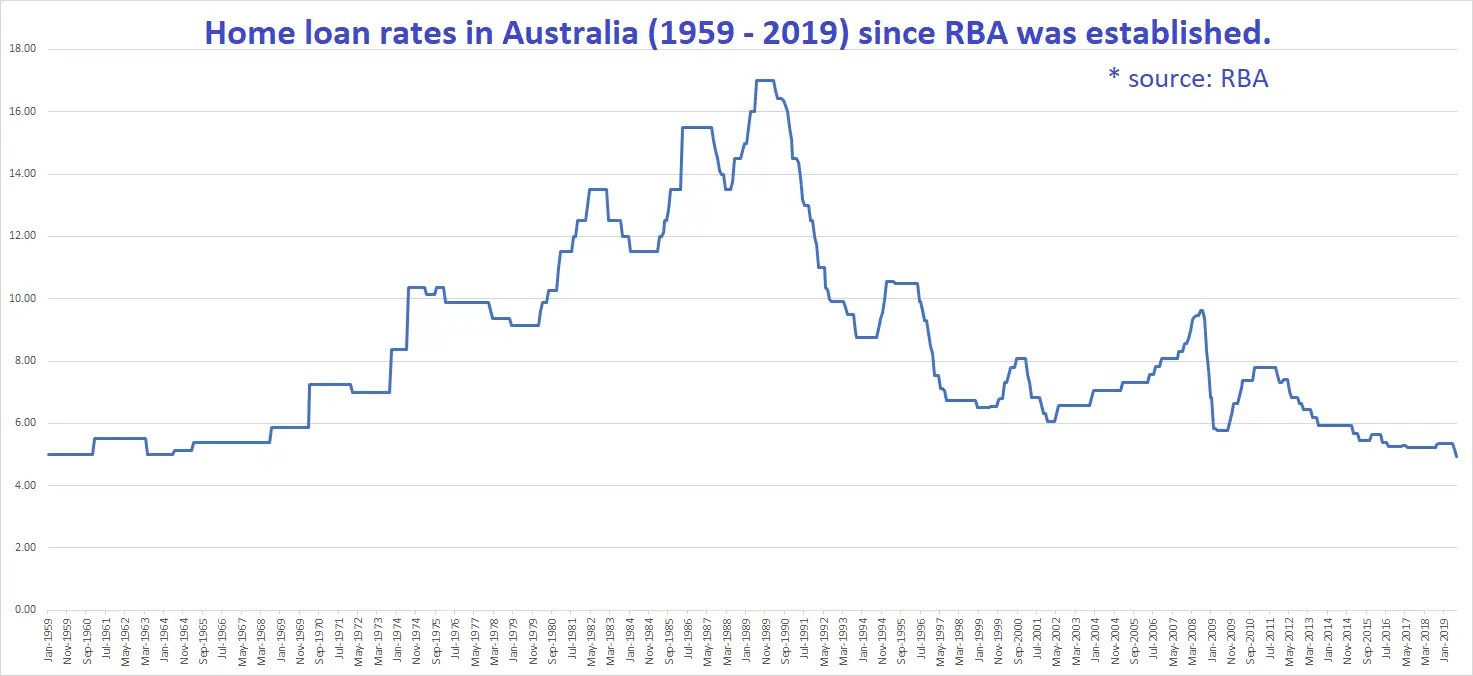
Mortgage rates were highest at 17% in January 1990

To answer the last question first, current mortgage rates are the lowest they’ve ever been. In January 1990 you could have been paying 17% for your mortgage and rates have never really been lower than 5 or 6% even during the Global Financial Crisis in 2008. So, why and how are mortgage rates so low right now? Which leads me back to the first question of how is the rate set?

All interest rates, whether earned on money deposited in a savings account or conversely paid on money borrowed to buy a house, are set off the Reserve Bank of Australia’s (RBA’s) cash rate plus a number of other factors (see previous post here). The RBA announces the new cash rate on the first Tuesday of every month (except January) and weighs a number of economic factors such as unemployment and inflation to determine the rate. The RBA can use the cash rate to influence borrowing or saving to help stabilise the economy.

Currently the RBA cash rate is 0.10%, the lowest it has ever been and almost zero.

If the RBA wants to encourage borrowing the cash rate will be lowered (you pay less interest) and if they want to encourage saving the cash rate will be increased (you earn more interest). Put another way, if the RBA wants people to borrow more they will make it cheaper and easier to do so. But why would the RBA want people to take on more debt?

During the global Covid pandemic with millions of people dying worldwide, billions being locked down for extended periods of time and countless businesses having to temporarily close and potentially going bust, the hit to the global economy has been huge. The Australian economy has been affected by Covid in many ways.

Total unemployment has soared from 5.1% to 7.4% in a five month period

The total unemployment rate has drastically increased from 5.1% just before Covid hit in Feb 2020 to 7.4% in July 2020.

Inflation has sky rocketed in 2021, a direct result of the global pandemic

Furthermore, inflation has gone from around 0% annual inflation in the year ending 2019 to almost 4% in 2020. An increase in inflation is generally a good thing but means the cost of living has increased and the rate at which it has increased during this time is significant. So, less people are employed and it costs more to live. Because of this and many other factors, the RBA is trying to stimulate the economy to spend. And the more we spend the more we borrow.

Therefore, currently you could say the cost of debt is cheap. It does not cost as much as it has done historically (or ever!) to borrow money, and because it is cheap, we can borrow more. For instance, in 2014 the average interest rate was 6%, which on a $1million loan would cost you $60,000 per year. Lending institutions calculate your loan size based on income, current spending habits and a number of other factors. If none of these factors have changed but the interest rate has dropped, because you used to be able to afford $60,000 p.a. on $1million but now it only costs $20,000, the bank is happy to lend you more because you can service a higher level of debt on a lower rate.

And this finally leads me to explain how being able to borrow more money means that buyers can pay more when buying property, which is driving property prices up. If you could only borrow $1million before and a house at auction goes past this point you would have been out. But now you can borrow $1.2million you still have more spending power to stay in the auction. It doesn’t really matter what the property is worth (up to a certain perceived value point), if there are two or more interested buyers with money to spend still interested in buying the property, the price will be set just higher than the lowest bidder’s limit.

The RBA and the government do not want to create a property bubble, nor push prices up any further but these unprecedented times cause for drastic action. Which takes me back to the Millennials at the start of this article and the economic conundrum of housing affordability for the younger generations. Should they stop eating avocado toast and save more, or should the government intervene with drastic changes to the property industry (via duties, taxes, incentives and disincentives)? Or will it be left up to the mums and dads to personally redistribute generational wealth?

Lockdown and virtual property auctions

Covid lockdowns have brought many unforeseen changes to the way we live our normal day to day lives. In person property auctions are prohibited and virtual auctions are the temporary norm. The property industry has had to pivot and find a new way to conduct business, especially during the current property boom.

You may ask, why would anyone want to buy or sell property during the pandemic and especially during lockdown, but life must go on. You may have listed a property then the city goes into lockdown, another baby on the way makes the need for more space time critical, or you may just be sick of living, working and exercising in the same home every day because of lockdown and need a change. The resilience and perseverance of many businesses and society to keep moving forward and living life as best as we can during Covid is inspiring.

Properties can be sold (called private treaty) or auctioned in Australia but where the area or property is in high demand it usually goes to auction. Certainly, in inner city Sydney, which is a very competitive property market, most properties will go to auction, and across Australia approximately one quarter of properties are sold via auction.

I attended countless auctions when I was trying to buy a property over 12 years ago in Sydney. There were massive turnouts, usually standing in front of the property in the street or squeezed inside the living room, with every inquisitive neighbour and passer-by also attending. The bidding was competitive and intimidating, and everyone had eyes on the potential buyers vying for a chance to secure the property before they reached their absolute (top top, maybe just a tad more!) maximum spending limit. I tried to buy at a few auctions when I thought I had a chance but was always outbid, eventually thankfully buying by private treaty.

The start of a virtual property auction with the auctioneer presenting and the bidding activity read to start below

At a virtual auction you are sitting in front of a computer looking at a live video of the auctioneer and underneath are are the live bids including the Bid, Bid Amount and Bidder (identified only by a number), with the latest bid at the top. You don’t know who the other bidders are, what they look like, are they old or young, are they single, couple, family, downsizers, and most importantly do they look like they have more money than me…? And bidders only participate by submitting a bid electronically, there is no noise aside from the auctioneer’s voice, who operates in much the same way as at an in-person auction.

Buyers who are interested in attending a virtual auction must electronically pre-register. This provides an interesting indicator in the lead up to an auction of how many buyers are seriously interested, whereas at an in-person auction you only need to register when you arrive. Of course, a registered bidder might not log in on the day, nor even place a bid, but 2-3 registered bidders is a good number, 6-8 is great and anything above that is excellent. This is vastly different from some in-person auctions I attended with literally 60-70 spectators and who knows how many bidders.

I had my reservations of the process, and as a seller was seeking the atmosphere and buzz from an in-person auction, hoping that would spur on the competition. However, my agent, who was absolutely amazing and patiently held my hand (figuratively of course, social distancing rules apply!) throughout the whole campaign, explained the unexpected benefits of this new process.

All in-person auctions would usually be scheduled on a Saturday but because everyone is at home sitting in front of a computer in lockdown, virtual auctions can be held any day of the week (usually Wednesdays to Saturdays) and interest for mid-week auctions versus the traditional Saturday is much higher. There is a captive audience just waiting for something exciting to do during their lockdown day.

Sometimes in a fierce bidding war it’s hard to hear and keep up with the bid and who is still bidding but the history of bids on the screen in front of you makes it very neat and organised. You can clearly see which bidders are currently participating, which may have dropped out and who is bidding in large jumps to tactically scare other buyers away. Adding a timestamp to the bids would be useful to track the flurries and pauses. It also saves a poor junior agent, just starting their career, having to frantically jot down these bids on a notepad as they are made.

While I prefer to see and size up my competition, some buyers may welcome the anonymity and controlled environment of a virtual auction. Tech savvy buyers in the younger generations are completely comfortable with virtual auctions. However there has been reservation from the older generations and on occasion these buyers request agents bid on their behalf or perhaps shy away from the process.

During an in-person auction I had always noticed the agents sidling up to bidders and whispering in their ear, trying to gauge their interest, encourage bidding and squeeze every last cent. I wondered how this would work in a virtual auction but agents are usually on text or phone call with the bidders (and seller) throughout the process so this line of communication is potentially enhanced while open conversations can be held in private. Bidders can simply not answer the phone or texts however, so this is not entirely fool-proof.

In terms of the feared lack of buzz I was very wrong. With the sole focus on those bids climbing up, with nothing but your budget and the latest bid in front of you, the process hones focus to the auctioneer and the number at the top of the list. If enough serious bidders attend (you only need two keen ones!) this alchemy creates some very fierce competition. As a buyer I would say your usual auction strategy is still very much applicable for a virtual auction – know your budget and be confident.

I asked my agent if virtual auctions will continue after lockdown life given their success but he predicts not. There is just nothing quite like the experience of an in-person auction. I wonder if auction apps will be designed to facilitate digital pre-registration and bidding during future in-person auctions, mixing elements of all methods and bringing the auction process into the digital age.

Queenslander homes

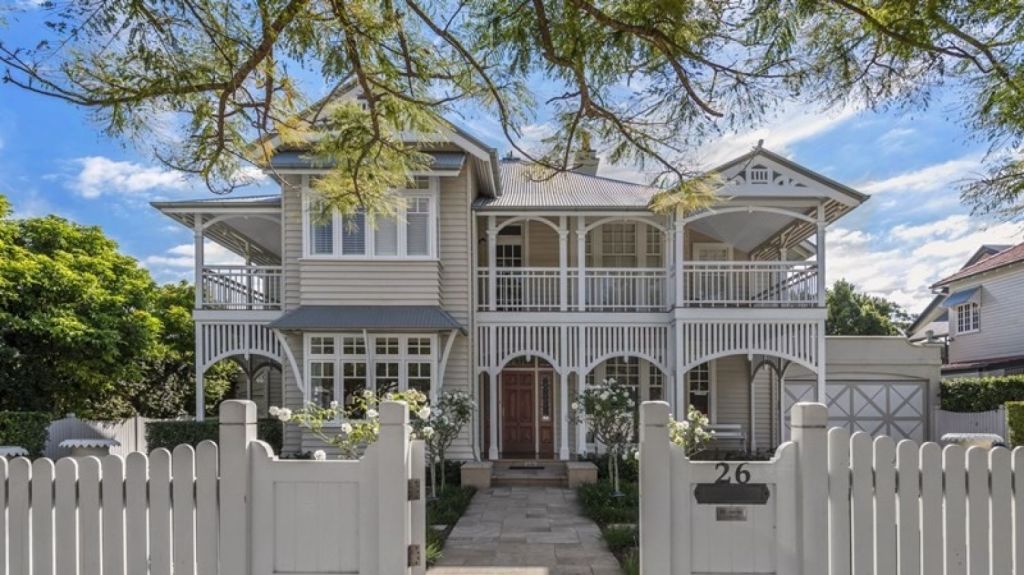
A Queenslander home from the 1880s

I have just moved back to Queensland, Australia (QLD) after 21 years. The last time I lived in QLD was for university and when I finished in 2000, I had secured an amazing graduate opportunity in Melbourne and couldn’t have left fast enough. I was an adult, I had a degree, a job and the world was my oyster!

Fast forward to today and I have lived in Melbourne, London and Sydney, met my wonderful husband and had three beautiful children. And whilst living in London for the second time, my husband and I decided it was time to finally go “home” and give our children the lifestyle we grew up with. Sunshine, a big backyard, a pool if we were lucky and most importantly, grandparents, cousins, aunts and uncles.

So here we are in Brisbane and I have fallen in love all over again with the Queenslander house. I’ve never lived in a Queenslander and never thought I would but walking past these magnificent beauties every day on my strolls around the neighbourhood has made me want to embrace fully our return home, including living in one of these glorious old houses.

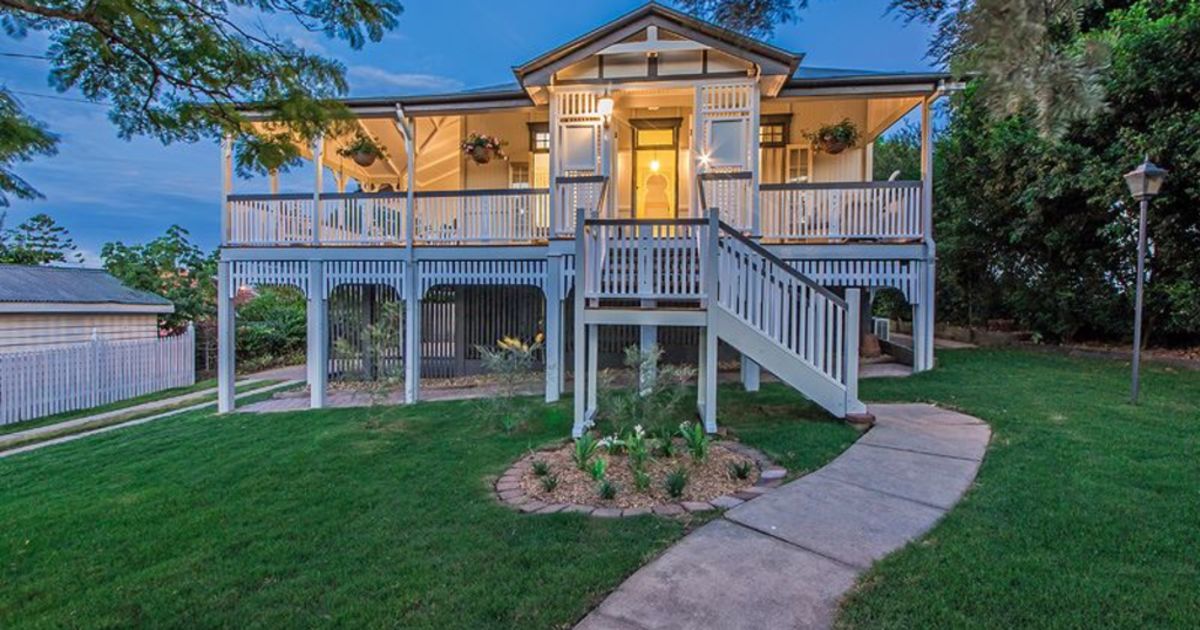
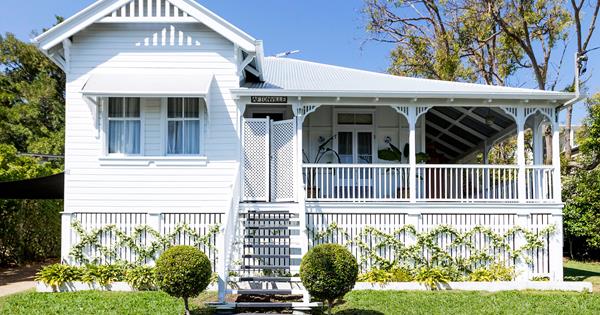
The Queenslander style home started being built in the late nineteenth century, making some of these homes over 100 years old, and is considered the most iconic Australian architectural style. The traits of a Queenslander are:

  • Single level home, detached on a separate block of land
  • High set on stilts
  • Made of timber with a corrugated roof
  • Large verandah extending around the house but not usually enclosing it
  • Decorative features such as cast iron or timber balustrades and coloured glass windows

While this style of architecture at first seems based on an aesthetic desire (because it’s so pretty!) in actual fact every feature was born from environmental and climate requirements, in addition to available building resources and the lifestyles of the time. This type of architecture is called “vernacular architecture”, where traditional or indigenous architecture has evolved over time based on local needs.

Stilts

To explore these features further and the reasons they were developed, lets start with the single level home set high on stilts. Queensland is HOT. It is so hot I didn’t think I could ever live here again, especially with my freckled skin and red hair. Before electricity and air conditioning, the houses were designed on stilts and stand alone to attract every small gust of wind under and around to cool the house down. The stilts also lessened the risk of the timber home above being attacked by termites.

Queenslanders are made from timber, which was cheap at the time and usually readily available from trees onsite. Long planks of timber were overlapped in a clapboard or weatherboard style giving excellent insulation for the humid climate. The timber and corrugated iron sheeting for the roof do not retain heat so are perfect for those hot summers over 40 degrees. Many in the northern hemisphere may be shuddering at the thought of cold winters in these cool houses but temperatures, certainly in Brisbane, usually bottom out at a mild 9 degrees in the evening.

Clapboard timber and the verandah

The large verandah allows that idyllic inside / outside lifestyle whereby windows and doors can be left open to capture the breeze whilst being protected from sun and rain. The verandah usually wrapped around most of the house and gave views over the garden, offering another living zone to the home.

The verandah and façade of the house usually had charming details such as balustrades and fretwork. Interestingly whilst these Queenslander houses were initially designed out of necessity for the climate and access to local and cheap building materials I suspect over time as these houses were built by more affluent families the decorative features were inspired by Victorian terraces, preceding the Queenslander style by 30 years in Australia.

Queenslander v Victorian Terrace

However, the Queenslander has evolved in modern times. Many are “lifted” and a ground floor built underneath to maximise space. Partial enclosure of verandahs has occurred, starting with the aptly named “sleep-out”, which was probably a bit breezy, to now complete inclusion within the house structure. Blocks (plots or lots) have been subdivided to capitalise on increasing land values and neighbours can peer into each others homes as dwellings are built mere metres apart. And as some of these beautiful old homes are extended to maximise space, some renovations are more sympathetic than others.

The Queenslander is the most iconic Australian house style ever built. And whilst practical it is also beautiful. It captures perfectly the style of living in this hot climate where families live seamlessly inside and outside, eternally escaping the unforgiving sun and occasional tropical rains. I hope they continue to be preserved as the demands of increased housing prices and building costs influence our historical streetscape. And I dream of living in my very own one day, continuing the custodianship of these beautiful and functional architectural masterpieces.

Its been a big week for the cash rate…

down-arrow

Not only did the Reserve Bank of Australia (RBA) drop the cash rate by 25bps to 1.50% (to even further historical lows) on Tuesday 2 August but the Bank of England (BoE) also dropped the cash rate by 25bps to 0.25% today, Thursday 4 August. Its been a big week for the cash rate globally.

Today the BoE cash rate cut was hardly a surprise with the devastating market effects from the EU referendum. The referendum was held on 23 June for the public to decide whether to remain in the European Union, an economic and political partnership between european member countries to foster economic co-operation. Since the UK joined the EU 43 years ago there are 28 member countries and in this time only two countries had left (Greenland in 1985 and Algeria in 1962). Since the referendum global markets went into shock significantly impacting currency and asset values.

The BoE has not cut the cash rate since 2009 during the credit crunch and since then global economies still have not recovered to levels prior. The BoE is trying to stimulate the economy and mitigate some of the referendum impacts, implying a downturn was inevitable without monetary policy changes. Stay tuned for further cuts.

The RBA cut the cash rate this week to promote sustainable growth in the economy while inflation returns to target, citing the global economy is growing at a lower than average pace. One of Australia’s main export is commodities, of which prices have been in decline for years. In addition, China’s lower than expected growth impacts Australia as a major trading partner. The Labour market shows mixed results with business investment significantly down. So not one or two major and/or new factors but just a general continuing of growth lower than expectations has prompted the RBA to further stimulate the economy. I wouldn’t expect another cut in September but there could be a further cut by the end of the year.

Once again, a lower cash rate is good for borrowers via cheaper debt but not good for savers (especially retirees) with lower interest income earned.

Keep your eye on the US election on 8 November, which could have far reaching impacts on all major economies depending on the outcome…


Cash rate cut to 1.75% as at 4 May 2016

Record-Low

Another record low cash rate! The RBA cash rate statistics page doesn’t even record the last time it was as low as 1.75%, only going as far back as January 1990. Debt has not been this cheap in Australia for decades.

The main reason the RBA gave for this historical low rate is due to “…inflationary pressures (that) are lower than expected.” This means the Australian economy is not growing as much as it is expected or at recent levels, and in order to stimulate the economy the RBA lowered the cash rate to promote households and businesses to take on more debt for investment to boost the economy.

The RBA choosing to cut the cash rate is a big decision and not taken lightly. The RBA would only cut the cash rate where they see the economy heading south for the foreseeable future and need strong measures to curb this downfall. So while debt may be cheaper, employment levels are declining and asset prices in general are falling.

Whether to buy property now is a trade off of factors:

  • debt is cheaper so you could borrow more,
  • however unemployment is increasing so job certainty is waning,
  • property prices are falling but where is the bottom of the market?, and
  • how long do you plan to hold the property to weather the slump back to higher prices and return on investment?

Speculation of a further 0.25% rate cut on 1 June would suggest a wait-and-see approach to buying property. And I hope you have a variable rate mortgage!

Buying: Apartment v House

AptVHouse

When I bought my first property I looked at both apartments and houses. As a single girl at the time an apartment seemed like the obvious choice, and one I initially thought was a given, but I ended up buying a house. Many factors determine the type of property you buy; not just the size, location or price.

The “White Picket Fence” Syndrome

Apartments tend to be cheaper. A three bedroom garden flat can be afforded by a small family but a three bedroom house in the same street usually commands a higher premium. People love the dream of owning their own piece of land, and this creates a higher demand for houses. Apartments are also cheaper because on that same piece of land you can build multiple apartments instead of just one house.

Apartment 1 : House 0

But on the flip side…

Because houses have more perceived value than apartments their value also tends to increase more over the same period of time. Even if houses and apartments both increased 10% in five years, due to the generally higher price of houses, a $500k two bedroom house will increase in value by $50k, whereas a $420k two bedroom apartment will only make you a gain of $42k.

However there are all different types of apartments. An apartment in a high rise amongst many apartment high-rise buildings tends to increase less in value comparatively simply because the supply of apartments in that area is large. However if you buy a beautifully converted warehouse apartment in a small block in an area with a lot of houses, you should see values increase healthily. Look for apartments with good bones and uniqueness.

Apartment 1 : House 1

Size does matter

Generally speaking apartments tend to be smaller dwellings than houses. Its easy to find one bedroom apartments and five bedroom houses but the reverse doesn’t apply. However a small family can happily live in a ground floor apartment with a garden as equally as an older couple can continue to live in their large family home long since vacated by the kids. Depending on your space requirements will generally lean you towards one type of property over another. However it’s important to consider how long you intend to live in the property and whether the size will continue to support your lifestyle.

Apartment 1 : House 1

Do I own the land downunder?

Owning an apartment technically means you own a dwelling but not the land. Apartments are sold under Strata title, which allows individual ownership of part of a property (e.g. the apartment), combined with shared ownership in the remainder (called ‘Common Property’ e.g. foyers, driveways, gardens) through a legal entity called the owners corporation.

Houses are usually sold under Torrens title, which registers the owner’s claim on the land and therefore everything on it.

Apartment 1 : House 2

Hidden costs

Strata ownership for apartments requires the payment of fees and levies to collectively maintain, insure and improve the building and common property. Strata fees can be quite high depending on how many facilities the building has (e.g. lifts, pool, concierge). Levies and special levies can be shockingly high depending on what work needs to be done to the building and common areas. A leaking roof in an apartment building can result in a surprise levy bill for tens of thousands of dollars per apartment.

However owning a house is no free ride either. When the roof needs repairing on your house, guess who foots the whole bill? And ongoing maintenance such as replacing carpet or fixing an old fence occurs more often than you’d like to admit. In addition, houses have regular costs such as building insurance, water rates and land tax (on investment properties), that you don’t pay owning an apartment. You have more control over when some of these costs are incurred with a house but generally you can’t avoid them forever.

Apartment 1 : House 2

Meet the neighbours

With apartments, because you share title in the building with the other apartment owners, coming to a collective decision on how the building is managed or what the fee and levy money is spent on can be challenging to say the least. Horror stories of Owners Corporation meetings are many!

In addition, apartment living means sharing walls, floors and ceilings with your neighbours and because of this your neighbours can determine how you live your life to an extent. Strata Laws can prohibit pets, the apartment below can reject your request to install wooden floors due to added noise, restrictions on structural renovations can prove infuriating, and don’t even think of hanging washing on your balcony! This can prove extremely frustrating and in extreme cases unbearable.

However houses have neighbours too. Planning permission for renovations still needs to be advised to neighbours, who can object. Often your house will share a party wall or fence with a neighbour, which needs to be co-maintained. And certainly in the case of terrace houses, noisy neighbours are as close as any apartment. But owning a house you generally only need to appease your bordering neighbours, and certainly no-one can prohibit you from having pets!

Apartment 1 : House 3

High maintenance

When you own a house you have to organize all of the ongoing maintenance, or if you’re handy or thrifty, do it yourself (eek!). This can take a lot of time whether you do it yourself or outsource, and dealing with tradespeople is often fraught with trauma (see previous post). Whereas the owners corporation for an apartment building will manage maintenance for the building and common spaces, and apartments themselves tend to have little to no gardens and smaller floor space, requiring minimal maintenance.

We moved from a lovely apartment to a house a few years ago and I seriously took for granted how low maintenance the apartment was. No lawn to mow (even the 5m x 1m strip at the house takes time to mow!), no paving to top up with sand, no garden lighting that requires fixing because the rain has snuck into the electrics, no fence to repaint because the rust is starting to show… a good part of every weekend is spent doing “house stuff”.

Apartment 2 : House 3

Security

You cannot compare the security of a 6th floor apartment in a building with multiple key fob security doors and lift access to a house, even with a burglar alarm. Whether it is psychological or not, I felt safer and thought my stuff was safer up in that apartment rather than in my house. There’s something about the lack of access from the street, more people around and generally better security systems that mean apartments tend to be more secure.

In addition to being low maintenance, apartments are generally easier and safer to lock up and leave vacant for a while, such as for long holidays or a pied-a-terre.

There were reports of “spidermen” burglars scaling high-rise apartment blocks on the Gold Coast years ago but lets assume the risk of death generally outweighs the value of a plasma TV strapped to your back.

Apartment 3 : House 3

Scope for Improvement

The clincher for me comes down to the fact that I can add a bedroom to a house but not an apartment. Whether your motivation is capital gain or more space, houses have potential for extension or complete rebuild to something amazing and worth much more than the original property. You can only really do cosmetic renovations to an apartment and I’d be careful on overcapitalizing. The scope to significantly improve a house is worth a lot. Whether you do the extension or simply sell it on, that potential has value, something you can never achieve with an apartment.

Apartment 3 : House 4

So there we have it. Houses win, but only just. I think the true tipping point is the lifestyle factors, and of course, how much is in your budget! I ended up buying a house because I wanted to hold the property for at least 10 years for the capital gain and I knew in that timeframe I would (hopefully!) be having kids so needed more bedrooms and outdoor space. It turned out to be the right choice for me.

An introduction to the London property rental market

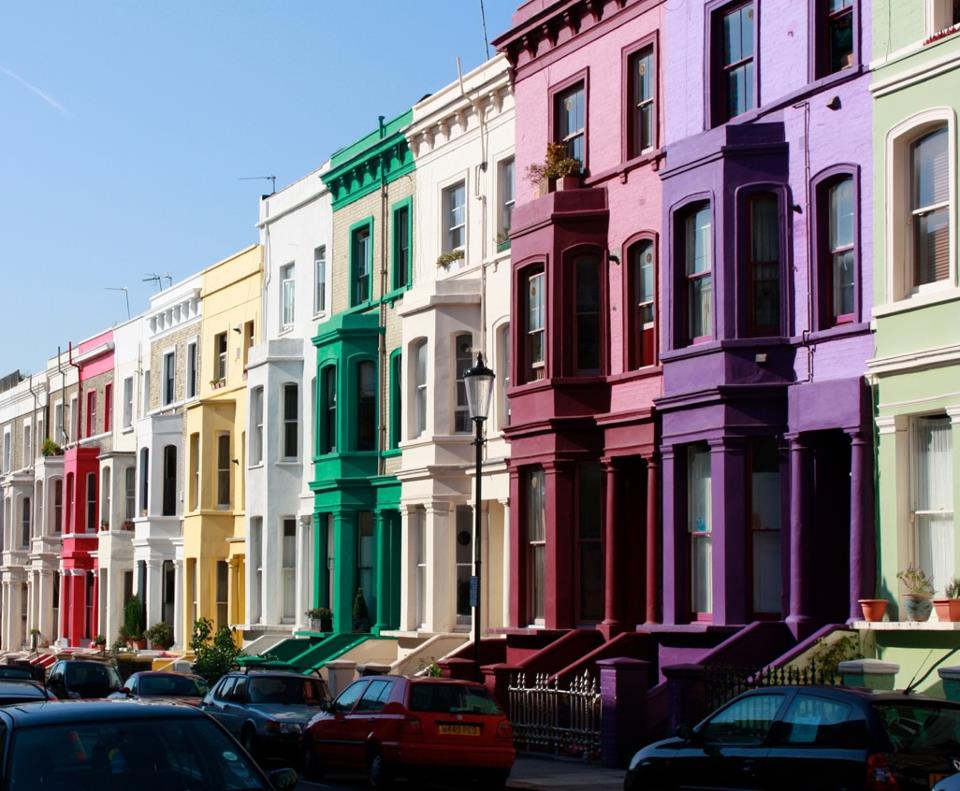
London coloured houses

While I have been battling the sleepless minefield of having a newborn and a toddler my poor husband has been in London for his new job. While it seems he should be having the best time sans wife and kids (and of course he has been enjoying himself, not least of which includes attending the Aust v Wales Rugby World Cup match!), he has had to find us a rental house. And wow it seems the London property rental market is tough!

You can start by looking at the online property websites (similar to domain.com and realestate.com in Australia) http://www.zoopla.co.uk and http://www.rightmove.co.uk. But as we discovered, a lot of the properties listed have already been rented, a lot of the properties don’t even get listed on these sites, and if the property is any good, won’t even have time to be listed. The best advice we got was to register interest with the good real estate agents in the areas you wish to rent. Then they have met you, know your story, have a personal connection with you, and when a property that fits your criteria becomes available, they can call you to discuss.

You have to figure out where you want to live. Luckily my husband and I have both lived in London, so know some areas really well. We also asked friends for recommendations for good “family” areas in London, because we sure didn’t take notice of those in our 20s! And then we had the debate whether we live in London (borough) or Greater London (in the other 31 boroughs extending to Twickenham, Croydon etc). We decided if we were moving to London, we wanted to live in London and we would forgo space and a backyard for proximity!

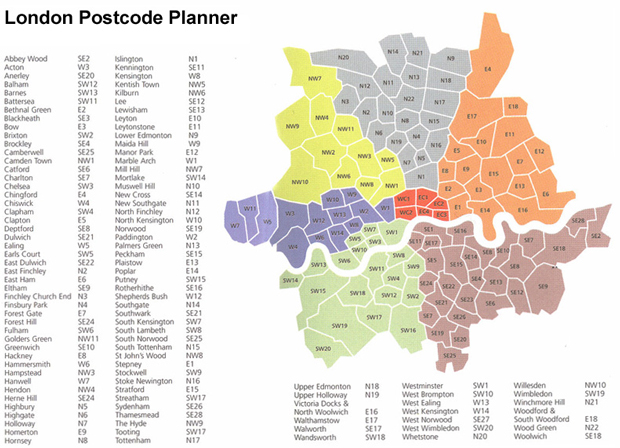
Understanding the postcodes in London may seem daunting at first but is really easy. Postcodes start with a compass location; North, South, East and West, and are then followed by a number indicating proximity to the centre. Postcodes centre on the “City of London”, officially Charing Cross Station (WC1). The central postcodes are given a “C” reference and are only East (“EC”) and West (“WC”). You then move out from these central postcodes to postcodes starting with simply “N” for north, “NW” for northwest, “S”, “SW” “E”, and “W”. An example being N1 for Islington, which is north of the City of London and very close, to SW20 for West Wimbledon, which is southwest of the City of London and the furthest postcode before you move out of the London borough .

london-postcode-guide

Geeking out here, UK postcodes are brilliant because with just the street number and the full postcode, you can find an exact location in the whole of the UK. A full UK postcode will firstly identify which area in the whole of the UK (not just London) and then the street and even the side of the street. So for example “SW1 2AA” tells me SW1 is Victoria/Westminster and 2AA is Downing Street. So if I add the number 10 I will find my way to David Cameron’s house. Love it!

Most importantly you really need to work out your budget. The research I did suggested London rents can cost 30-50% of your net income. Apparently some credit agencies will advise landlords against leasing to tenants where the rent is greater than 30% of gross income. I thought this sounded quite high and we would pay nowhere near that much, but on one income (until I return to work next year) and needing 3 bedrooms, we are definitely pushing our upper limit. Then you have to factor in those unexpected UK charges of TV Licence fees (what the?!) and Council Tax (equivalent of Council Rates, paid by the landlord in Australia), and of course transport charges depending on which zone you live in.

London rental map

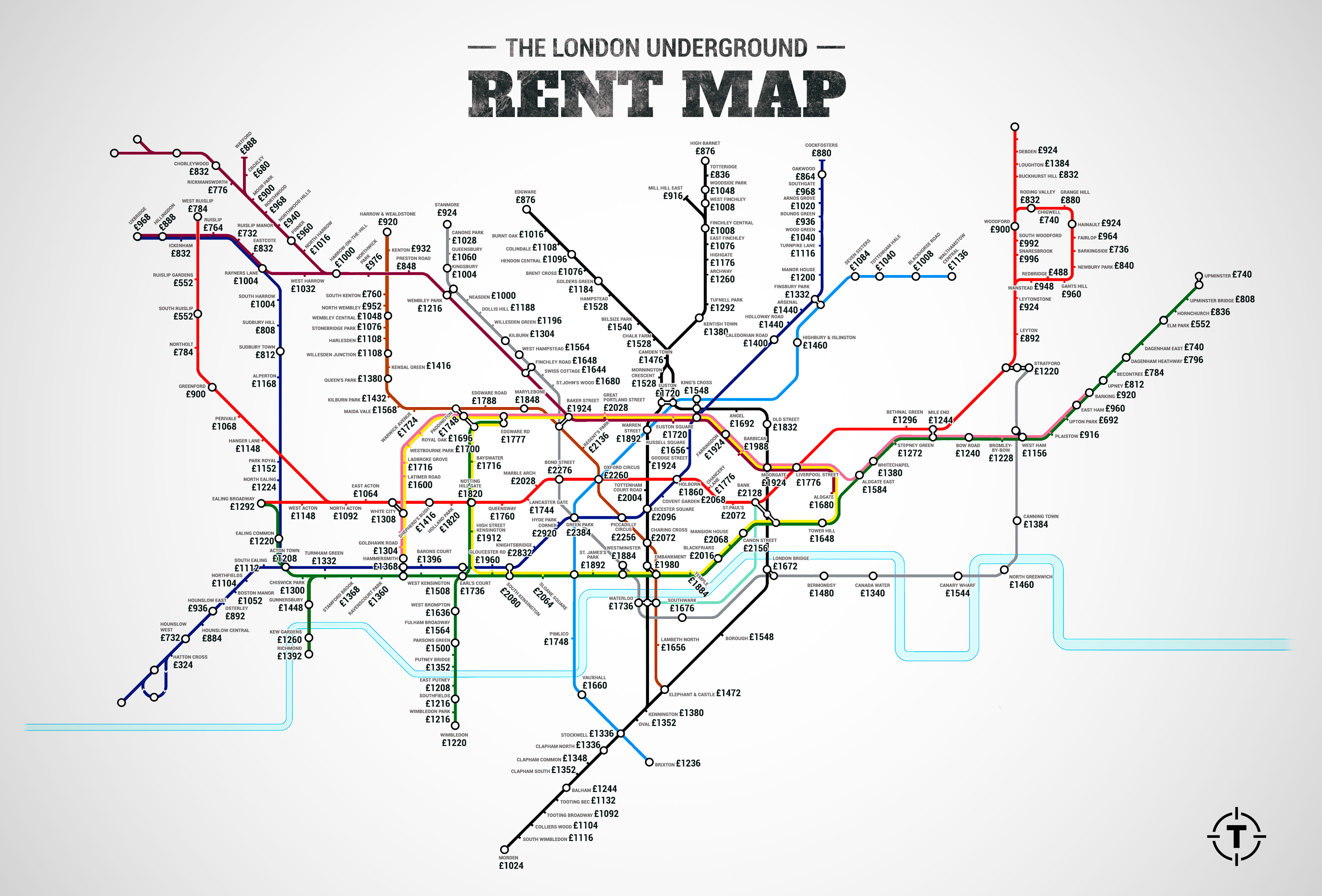
This picture shows a great comparison of the rental costs in London. I’m not sure if the amounts are current but if you’re comparing areas, this is pretty spot on!

Then be prepared for the competition! The rental market is fierce and prospective tenants regularly offer more rent in order to secure a property, and good properties often get leased within days. So you have to be all over it like a fat kid on a cake, and be prepared to pay up for a property you really love.

Because we now have kids and things such as health and wellbeing now rank so much higher than where the best pub is, I wanted to understand where one lives in London in relation to levels of pollution. Luckily I have a cousin who is a Paediatric Allergist in London and she simply advised against living on main streets, suggesting even just one street back from a main street has no more pollution than the next big city.

So take the time to understand the areas in which you want to live. Spend a Sunday walking these areas and discovering on which streets you’d like to live. Especially work out how close your nearest underground or overland station is, and how you get to work and other regular haunts.

And finally, the best advice I got when moving over in 2006, which is still relevant, was to live where you friends live. Even though the transport system in London, while sometimes unreliable, is one of the best in the world, you don’t want to live in SW15 if all of your friends live in N19.

And just as a final note, we discovered that properties with 3+ bedrooms tend to be unfurnished. We thought we would easily find a furnished house and only ship over our personal items but this does not seem to be the case. So either be prepared to ship over your furniture, or buy when you get there.

We settled on a lovely 3 bedroom house in Wandsworth, close to Wandsworth Town overland station, and within budget! We move in late November. I haven’t lived in a rental for over 7 years so that will be a bit weird again!

We are packed!

cardboard box london bus

…well sort of! The packers came today to pack the items we are putting in storage for our move to London. Yes we’re going back. Albeit much older and with two kids.

The last year has been a little hectic, to say the least. I’ve thought of posting nearly every day but hadn’t the time or the motivation to write during what spare time I had. After moving in after renovations and needing a break from that *insert expletive here* experience, we then got pregnant, had our second child and are relocating to London next week for work.

To catch up, it seems we have reached the peak of the property market (I’d like to suggest my last post predicted this), and the cash rate is still 2%. I think the RBA is enjoying the pressure the banks are putting on borrowers with recent rate rises due to higher capital charges (which I can explain, if anyone’s interested?). Markets are calling for the RBA to cut rates to combat this but in actual fact it’s pressuring the housing price boom down and doing the RBA and the Government’s job for them.

So step one in our packing is complete… next stage is packing what we will take on the plane (I have investigated EXACTLY how many kgs we can take!), what will be air freighted (80kg, which takes 8-9 days), and what will be shipped (which takes 8-9 weeks). And with kids this is no mean feat. Because kids need a LOT of stuff. Their 59 million favourite soft toys (“I want Ferdinand, and Elephante, and SheepDog, and and and”), 376,000 favourite books (“I want Chutney, and Marshmallow Mouse, and Cars Cars Cars and and and”) and 39 vehicles of all description (“I want Fuoco Motore x 3, Orange Car, Porsche, Digger Digger Digger!”). And that’s just the toddler. And they can’t wait for these favourite, precious, must-have-immediately things for 8-9 days for the air freight arrive. So I have been weaning our toddler off lots of toys onto just a few key ones. Thankfully our baby doesn’t need many toys but she needs loads of other things; blankets, nappies (!!), wraps etc etc etc.

So my plan is to effectively pack our bags a few days before we go and weigh them to within an inch of their life. Then pack the airfreight and do the same. Then everything has to go on the slow boat and we’ll just pretend we’re camping. First world problems!!

Thankfully we are being properly relocated with work, so we have packers, shippers, temporary serviced accommodation when we arrive, relocation services helping with finding permanent accommodation, rental furniture while ours arrives, visas etc etc etc. And then there is the list of things we have to do in Oz before we leave…

Rent our house – this friends is one of the reasons you shouldn’t pay off principal on your mortgage (see previous post here). Sell our car. Organise the new baby’s birth certificate and passport, adding her to Medicare, private health insurance and applying to schools, because god knows I’ll forget to do that when we move and by the time we get back in a few years she won’t be able to get in anywhere for high school and the poor thing will be desperately deprived for life (note the sarcastic parental guilt). Cancel utilities, phones, remove ourselves from the electoral roll… the list goes on!

Plus did I mention we just had a baby?!

I still have loads to write about the Sydney property market, renovating and everything property, but will also be adding some insights on London property too. Next post is about the London rental market.

So we leave next Thursday. Wish us luck in our final week!!


Have we reached the peak of the property market?

housing-bubble2

Is it possible that property prices can continue to go up? How can anyone pay more than the lofty heights properties are currently selling for? Do we have a property bubble? And if so, will it ever burst??

Sydney has seen property prices soar in some suburbs by over 20% in the last 12 months. Melbourne is also achieving considerable price increases, with other Australian cities experiencing flat to down prices. The RBA cut the cash rate again last month to 2%, while acknowledging that Australia does not have a property bubble, just Sydney. So maybe I am in the eye of the storm.

I am seeing firsthand and hearing of these whirlwind auctions. Just recently I and a friend attended two separate auctions with the final selling price 10% higher than the passed in amount and absolute upper budget respectively. These auctions were across different price ranges ($1.6mio and $680k) and different types of properties (3bdrm house and 1bdrm apt) so this situation doesn’t seem isolated to a niche of the property market.

Coupled with the never ending articles on apartments selling for $1mio over their reserve, and an inner city terrace no wider than a Queen bed selling for just under $1mio, and the Sydney auction clearance rates at a high on 9 May 2015 of 89.2%, these two scenarios do not seem isolated.

The people benefiting from this situation are the sellers, clearly. Especially sellers who don’t have to buy or trade up in the same market: investors, downsizers, or families moving to QLD! If you can or need to sell a property in the current market, it seems like now is the right time. But without a crystal ball, how do we know prices won’t continue to increase. And can they?

Prominent and controversial ideas for curbing this bubble have been made to all corners of the industry: changes to property laws with regards to Capital Gains Tax (CGT), Self Managed Super Funds (SMSFs) and foreign investors; changes to lending practices for investment and interest only loans; and changes to selling practices with more policing of price guides and mandatory publishing of sale prices. But you could argue for and against all of these suggestions, and quantifying actually how much of an impact these would have is speculative.

Then there have been discussions on requiring fundamental shifts in how we perceive property: implementing a long term rental market with more support for tenants with longer leases, like in Switzerland; coupling this with changing the Australian dream of owning your home, and a house specifically; to moving perceptions towards other high returning assets as investments, such as shares. I think all of these ideas have merit, but would take significant time to implement.

What about the simple economics of supply and demand? Sydney, and particularly within a 10km radius of the CBD, is somewhere Australians and migrants will always want to live. That will never change. So is the solution to build more properties in this area? How can this be achieved with little to no new land available? And there is a lead time to building of at least 18 months (for an apartment block). So what then?

The quickest and simplest solution is to get more sellers to sell. The more properties on the more market the more supply, buyers then have more choice and there are fewer buyers competing for the same properties. So how do we get more sellers to sell? Keep spending big buyers… sellers won’t be able to resist selling at these astronomical prices!!


What is a Comparison Rate?

Screen Shot 2015-03-02 at 1.48.05 pm

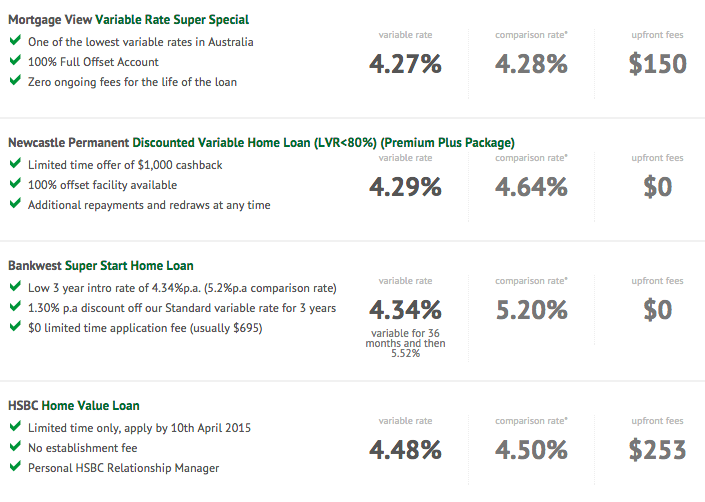
Comparison rates show that the cost of a loan is greater than just the interest rate. 

I used to think the comparison rate shown by a financial provider was the highest rate with a competing financial provider for the same loan terms, to show how good their rate was. Comparison rates are actually a regulatory requirement for financial providers to supply. So they are not some dodgy rate used to mislead consumers. They actually have a good purpose.

A comparison rate is used for any type of loan; home, car, personal etc, and is a combination of the annual interest rate and the equivalent in fees and charges, taking into consideration the amount borrowed, loan term and the repayment frequency, expressed in a total annual interest rate.

For instance, a $100k loan fixed for 3 years at 4.84% p.a, paying monthly, with a loan term of 25 years may incur fees and charges such as a $600 establishment fee, and a $10 monthly service charge. The interest rate and the equivalent of all of these fees gives a comparison rate of 5.51% p.a.

Basically the 5.51% is comprised of:

  • The annual interest rate of 4.84% for three years, and then a proxy rate for the remaining 22 years of the loan, plus
  • The one off establishment fee of $600, incurred at the start of the loan, plus
  • The $10 monthly service fees, over the 25 year term of the loan, which is 300 payments totalling $3,000, calculated in present value.

Note that there can be many other fees incurred on a loan that are not included in the comparison rate. These fees are not known because they may or may not be incurred, and some examples are: redraw fees, late payment fees, and early repayment fees. Comparison rates also do not include other purchasing fees such as stamp duty, solicitors costs and mortgage registration fees.

The fundamental premise behind comparison rates is sound – it is trying to represent to consumers that the cost of a loan is greater than just the interest rate and quantifying this in an easily comparable way via an “all-in-rate”. The National Credit Code (NCC) enforces comparison rates and “requires that credit providers include a comparison rate when they advertise fixed term credit which is for, or mainly for, personal domestic or household purposes.”

However the problem with comparison rates is that there are so many inputs into the calculation that they are actually very difficult to… compare. When reviewing comparison rate quotes there will always be a footnote, which you should read. It could say something like this “This comparison rate is based on a secured loan of $150,000 over the term of 25 years.  WARNING: The comparison rate applies only to the example given…. Different amounts and terms will result in different comparison rates….” So if you’re looking at borrowing anything other than $150k, for instance, the comparison rate will not be useful. And different lenders can calculate their comparison rate on different loan conditions.

I would suggest speaking to a mortgage broker who can do the leg work for you and find some of the best rates for your situation, understand the different types of fees for each product, and present all of the options to you in a clear way. As always, check how the broker is remunerated to ensure you’re not being sold products they receive more commission on than others.